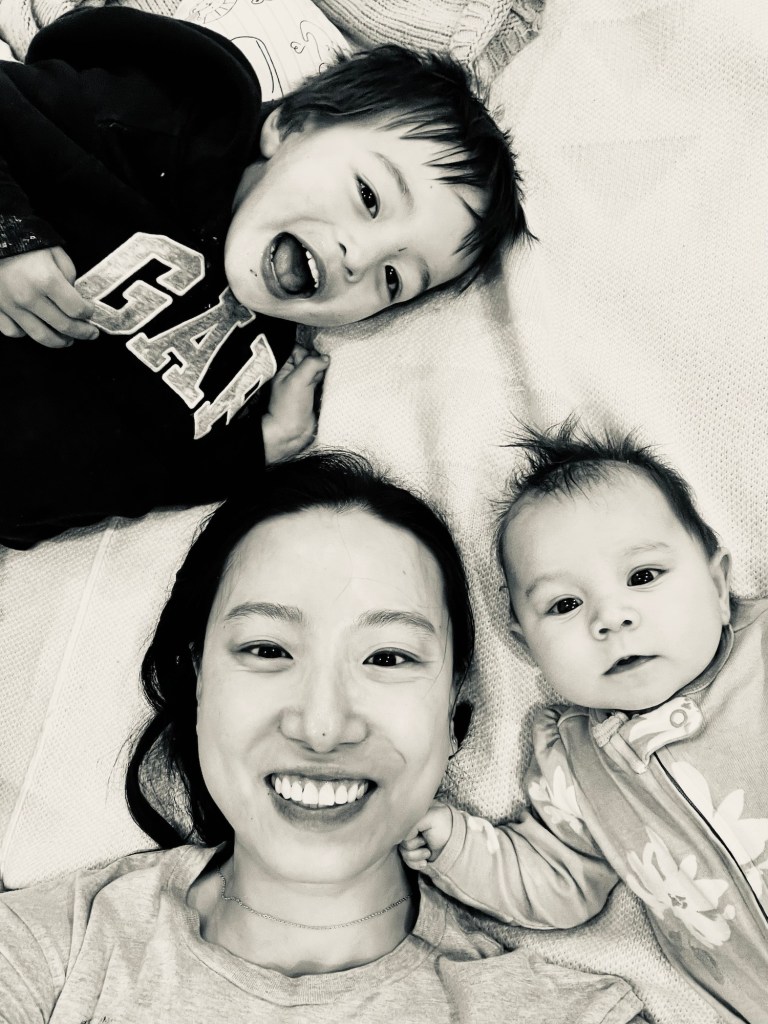
Saying goodbye to my parents

On February 28, 2025, I dropped my parents off at Hell on Earth, aka LAX, early in the morning. I’ve dropped them off at this airport numerous times. But this time, they weren’t flying back home to Virginia. They flew back to their mother home, South Korea.

They had four luggages and one backpack. For people who had lived so economically and simply, they were shocked by how much stuff they had accumulated over the 24 years they had lived in the United States– mountains and mountains of stuff that they threw out and donated and gave away.

I remember the story my father used to repeat to us, the way patriarchs retell family legends, of them packing all their belongings in Korea into two luggages, and landing in Singapore as fresh missionaries with a 4-year-old and a 2-year-old. My father was filled with ambition; my mother filled with apprehension. Now they return home with twice the luggage, five times the wrinkles, 34 times the lived experience of full-time ministry, and infinite times the joy and gratitude.

Woori was wailing as we drove to the airport that day. She hates being in the car seat, and no matter how many tongue-clucking and funny faces my omma made, she made her displeasure known. So by the time I pulled the Mazda SUV up to the curb of Tom Bradley International Terminal, I was a little frazzled, my overstimulated senses as messy and stuffy as my heart.

We pulled the heavy luggages out to the curb. Then we embraced. Once, twice. I had to let go quickly as I wasn’t technically allowed to park there, but my hugs were also hasty because once I enfolded my arms around my omma and abba, breathing in their familiar scents, touching the bodies that cradled me skin-to-skin from the moment I was born, I didn’t want to let go.

They waved. I waved. Then I hopped into the SUV and pulled out, back into the smoky tunnel of LA morning traffic. And as I drove away, Woori cried, and I too cried.

It is an end to an era.

It is silly, I tell myself, to be this sad. It’s not like my parents are dying, or unreachable. They are simply moving an ocean away, and with technology, I need only tap my screen to see their faces and chat with them. It’s not like I got to see them that often even when they were stateside, since we lived in opposite coasts.

But it does feel, in a way, like death. Or at least, an ending. They have closed down their church of 24 years, the church I grew up in, served in. The church that sent me off to college and then welcomed me back when I dropped out after being hospitalized, and then sent me back off again. The church about which I have complex feelings, the way anyone does with family members squeezed under one roof. The ministry my parents gave more than half their life to is changing. I can no longer go back “home” to Virginia, and that feels sad, even though Virginia hasn’t felt like home in years.

It also feels like a death to my hope that my children will be close to their grandparents. Living overseas, I grew up seeing my own grandparents once every three years, at most, and whenever we visited them, I felt awkward. Each visit was like meeting strangers for the first time. We had almost zero history and shared very little memories and experiences. They didn’t have much to say to me, and I didn’t have much to say to them. I really don’t want that for my own children. The thought of them not knowing their grandparents, not receiving their affection and admonishments and doting, pains me.

But more than anything, this closing of an era is a jolting reminder to me that my parents are aging. During the two weeks they spent with us here in LA before they flew to Korea, I saw my parents get more easily tired. Omma has lost more than 15 pounds and is dealing with health issues, while abba needs a few naps a day to push on. Omma has always been more physically fragile, but Abba to me has always been like an oak tree– thick, strong, unwavering, abounding. Even his voice was like oak– a rich, loud baritone. To see his sparse gray hairs, to hear his cracking voice, I felt fear and anxiety, knowing the thing that most human beings face at some point in their lives– the passing of their parents– is drawing near.

Death was a regular topic while my parents were in LA. For the first time, they told me what they wanted when they died. Both told me they want us to pull the plug should they be in a coma. They want us to scatter their ashes in the mountains. We also talked about what to do if one of them dies before the other. It’s terrible talk, but it needed to be said.

Being a 37-year-old wife and mother is to be sandwiched between two duties– one to the family I’m raising, and the other to the family that raised me. One family is fresh and new, still knobly and plump like buds about to bloom. The other is wilting, the peak season long passed. I myself am in full bloom, but I’m noticing a few petals starting to droop, and I know my peak is over, particularly as I feel the growing aches and creaks of aging. It is a very odd, uncomfortable, conflicting season in life, to be worrying about your kids at the same time you worry about your parents.

I knew my parents would have financial issues. Now that they are no longer receiving an income from the church, they had to figure out a new living situation. They didn’t have anything planned for retirement other than social security. They have no property, no assets. When they applied for a new credit card, the company gave them a $1,000 credit line. They couldn’t even afford to continue staying where they’ve been living for 22 years– a townhouse that’s 40 years outdated, with tiny rooms and laminated kitchen cabinets that are literally falling apart.

That’s how my parents had been living all these years. They tithed about a third of their income to the church. They never considered building wealth, at least not the earthly kind. My mother didn’t once own a designer handbag. My father wore the same suit he bought in Korea decades ago, and his ties were gifted by others. They lived simply and trusted that the Lord will provide.

I have less faith, I suppose. I got a little angry when they refused, several years ago, David’s offer to buy their townhome for them so they didn’t have to worry about housing. I got irritated thinking about this again after they told me they shut down the church. “You should have said yes to David’s offer when you had the chance!” I said to omma.

And that’s when they decided to return to South Korea and apply for dual-citizenship. It was the most practical decision– Korea has great benefits for the elderly so they don’t have to worry about health care; they could comfortably live on their social security there, since housing is cheaper, as long as it’s not in major cities such as Seoul. But they underestimated the cost of housing even in smaller towns. Their budget could only afford old, rundown places in rural villages.

Meanwhile, David and I are renovating our new house. What was originally going to be a bit of a fix-up here and there turned into a full gutting. Basically, we are building a new customized house. Our renovation budget has blown out of proportion and I’m embarrassed to share it. While my parents were here, I was deciding on wall paint colors, and omma accompanied me to get some paint samples, which cost me about $160– for freaking paint SAMPLES! The money we are spending on this house is insane. Three exterior doors cost us $15,000!!!

It just didn’t feel right, that we are building our dream house while my parents look for crappy, bug-infested housing in the countryside. I felt a pang to see how excited my mother was for us. She wanted to know what we’re doing for the kitchen, the bathrooms, the exterior paint, and had plenty of opinions. She told me she enjoys watching home renovation videos on YouTube, something I learned for the first time, and it wrung my heart to realize that she admires a tastefully decorated and designed home but never had the chance to live in one, and in fact, never imagined she could.

So one evening, while my parents watched Tov and Woori, and David and I were on a date, I proposed to David that we help my parents buy a house in Korea. Years ago, David had loaned his brother money for a business project, and his brother was finally returning that sum back to us. Perhaps we could direct those funds to my parents’ housing instead?

I was a little nervous suggesting this to David, not because I thought he’d refuse, but because it puts me in a vulnerable position, and I pride myself for being self-sufficient and independent. And though technically this money belongs to both of us, it’s still a lot of money, and it’s money that came from David’s earning, not mine. So it took a lot of swallows for me to ask David.

I wasn’t surprised when he agreed. I knew he would. But I was still touched beyond words when he did. Turns out, a day ago, he had been listening to a devotion about not storing your treasures on earth but on heaven, and that had made him ponder. Then that Sunday, our pastor preached on the Ten Commandments. To honor your parents, the pastor said, includes providing for them financially in their later years.

What’s more, both of us had been praying about money this year. I’m praying about generosity, and David’s praying about wise stewardship of our finances. The Lord has blessed us financially with a new house, and we want to use it for the glory of Him and the good of others.

All of this didn’t feel like a coincidence. It felt like God was blessing us to bless our parents.

David and I agreed to broach the subject on the last night with my parents before they left LA. I told David I was nervous about bringing it up, because historically, abba has been strongly against receiving any help from us. I had no idea how he would react, and I braced myself for a five-point argument on why he should accept our help. I told David he had to be the one to offer it; it couldn’t come from me. And I told him to emphasize how this conviction came from God.

That night, after dinner, David and I exchanged glances. It’s time, I said with my eyes. David turned on a show on TV so Tov won’t bug us, while I took Woori off her high chair and held her on my lap so she’d be quiet.

“So,” David began. “Sophia and I have been praying about being generous with what God gave us. And I’ve been thinking about how we want to invest with what we have…”

“Oh?” Abba said, having no idea where his son-in-law was going with this.

Well, I was really proud of David that night. He mentioned everything I had hoped he would, and when he was done, my father grasped his hand, nodded, and said, “I receive.” And then he choked up, and said again, “Thank you. Thank you Lord. I receive.”

I was so shocked that I couldn’t believe my ears. Omma was just as incredulous, so she asked him, “Wait, so what do you mean. Does this mean you will accept the money?”

Yes, Abba said. He sees how much the Lord has blessed us, and by accepting it, He too is receiving God’s blessings, and because God blesses those who give, he believes he is also blessing us by receiving it.

I felt my heart release with relief and gladness. Before David and I got engaged, I had actually asked him to use whatever he would have spent on my engagement ring, and donate it instead to my parents’ ministry. That didn’t end up happening, but now that I had more than I could have ever imagined– I, who once couldn’t afford laundry detergent and had to make my own!– it made my heart feel so full that I was able to present this one gift for my parents in their older age, in this new season of their life. This was the first significant financial support I’d ever given my parents. It was also the first step in tilting the balance towards me supporting my parents, rather than them supporting me– an end to an era, indeed.

What made my heart just as full, however, was that David was doing this with me. As I pray about generosity this year, my own husband is showing me how to be generous not just with his finances, but with his heart.

It is easy for me to be generous with my own parents; I would give them part of my liver if they needed it. But it’s not as easy for a son-in-law to be as generous, to treat his wife’s parents as his own. He wasn’t just giving my parents a better house; he was giving them his love, and in there is his love for me. And I think in that moment, my father recognized that too– he was moved not just by the unexpected gift of a house, but by the clear display of a husband’s care and love for his daughter. In this, he saw God’s grace, His love and providence and goodness and faithfulness that have never failed him in his almost 35 years of ministry.

After my parents left to pack up for the next day’s travels, and after David and I had put the kids to bed, I gave my husband a hug.

“Thank you,” I said, tearing up.

“For what?” he said, acting all cool.

“For everything,” I said, and I meant it.

David made a “huh” noise, a sound he makes when he’s pleased but also trying not to sound too pleased about it. Then we talked about the show he’s watching.

We’ve never been a couple who talks all sweet and cooey and sentimental. We reserve nice sappy words for birthday cards, where we don’t have to make eye contact and hear those words out loud, so awkward and unnatural to our ears; we don’t kiss goodnight, we knock heads.

But within that brief exchange was a lifetime of card sentiments– I felt seen, valued, cherished, respected. David’s act of generosity had so many layers of blessings in it, like a mille crepe. He blessed my parents. He blessed me. He blessed our children by showing them what it looks like to honor one’s parents. He blessed my brother, who now can worry less about our parents. He blessed my relatives in Korea, who no doubt will hear from my father how the Lord has blessed him through his son-in-law. This is how true generosity works– it just keeps on giving and giving.

Saying goodbye to my parents felt strange. I felt a little like I was the parent, sending my kid to school for the first time. As the last person to hug them goodbye before they left the U.S., I felt like I was sending them out into the next chapter of their lives. I was a little worried, a little anxious, but also excited and proud. I wanted to cling on, but I had to let go. And I heard God usher them away, saying, “Well done, good and faithful servants.”

And off they go.

These are the best days of my life

Woori has been going through a sleep regression the past three weeks or so, exacerbated by teething. Like clockwork, at about 12:30 am, she wakes up screaming. And from then on, she wakes up every hour or two hours.

In the past month, she also stopped napping in her bassinet. She doesn’t even last 5 minutes before screaming and flailing so hard she’s breathless and hyperventilating.

All that to say, I am a walking zombie. I wake up in the morning groggy, with that deep-in-the-brain ache because my brain has barely been able to shut off all night. My body and hormones are off, because I’m night-sweating again, waking in a soaked T-shirt. I’m almost falling asleep as I drive Tov to school. Often, I pass out half-dead with lurid dreams while holding Woori in the nursing chair. (Somehow, I still have energy to read novels late at night, but that’s the kind of nonsensical superpower parents have when we are liberated after putting the kids to bed.)

It’s been hard, but honestly I don’t really have the mental and physical energy to even think about how it’s hard. I just go on, putting one foot before the other, day by day, dragging my weary body through the mire of parenthood.

There have been moments of lucidity though. I remember one morning, as I heard Tov having a tantrum with David in his room, and Woori starting to fuss in bed with me (we co-sleep now— it just keeps everyone sane), and felt the bunched-up clammy sheets under me, and raked my hand through my damp, disgusting postpartum hair, probably pulling out 237 strands of hair that I don’t have to lose, all of a sudden, this thought came to me: “These are the best days of my life.”

It’s cathartic to complain about parenthood, especially those early childhood years, when everything is a struggle, from shoving a sweatshirt over a screaming, snotty toddler’s head, to driving stressed because the baby’s shrieking like a banshee in her car seat and there’s nothing you can do about it. Complaining about the hard moments of parenthood is viral content on social media— I enjoy them; I enjoy commiserating and sharing them with my fellow moms and dads. It brings much-needed comic relief to a period that feels so long and consuming.

But still. These will be the best moments in our life.

When I was young, I could not wait to grow up. I wanted to be independent, to earn my own money, choose what I want to eat, where I want to go, without asking my parents for permission.

Meanwhile, my childhood best friend dreaded growing up. “I want to stay a child forever,” she told me. She liked her cocoon of innocence and lack of responsibilities, liked the assurance that someone bigger and wiser is taking care of her.

“You’re stupid,” I told her, with all the eloquence of a 9-year-old. “Or crazy. Why would anyone ever want to stay a child?”

She gazed with longing into the past. I gazed with impatience into the future.

And I’ve lived like that since. I’ve always been impatient for what’s next, what’s new. When we immigrated to the United States, I eagerly kissed everything and everyone in Singapore goodbye. Next! In high school, my actions and thoughts were all set towards preparing myself for college. Next! Once in college, I couldn’t wait to graduate and be done with school forever, and kickstart my career. Next! Then once I got a job, I was never content in my career. I wanted to work in someplace more prestigious, and lived in constant frustration of feeling stuck in my job, watching with envy when my peers seemed to hop on to shinier opportunities. Next. Next. Next!

What’s next? What’s new? Is this it? To what end I was working towards, I did not know. What was the achievement that would finally satisfy me, to make me relax and say, “This is it,” what was the accomplishment that would allow me to start enjoying what I have, I do not know. I was just perpetually restless, rootless, reaching out and out.

And now. As a parent, as a mother of a 2.5-year-old and a 5-month-old, I seem to do both, looking both forward and backward. I look at old pictures of Tov and my heart aches. Sometimes he looks up at me a certain way and I lose my breath; I’m so shocked at how boyish, how non-toddler his expression is. My boy is growing up before my very eyes, and I am still caught off guard by how fast.

Even as I hold Woori, who blessedly still fits in my arms and stays where I put her, I am already mourning, looking into to the near future when she’s 2 like Tov and Tov is almost 5, and I feel nostalgic for the very period I’m currently in.

Parents have talked about the importance of “soaking in” every moment, but I feel like every moment, even as I’m living right in it, keeps slipping through my fingers like water. Rather than soaking, the moments seem to flow out like a stream, and all I have are pictures and reels on my iPhone as memories that are memories because they are already in the past.

Yet at the same time, I’m still planning my future, wondering what’s next. When are my kids going to be independent? When can I start having my time back, my body back? When can I restart my career? When I can have my mind and creativity back? When can I start writing again? And because motherhood makes you insane, I also wonder: When can we have a third baby?

Perhaps the present moments keep slipping me by because I keep looking back to the past and out into the future, but rarely stay still to enjoy the present. Honestly, I don’t know how. I haven’t practiced that enough to suddenly do it now.

Which brings me to that morning when I woke up feeling that heaviness of trying to swim upstream, facing the new day with exhaustion, and that seemingly random thought came to me— that these are the best days of my life. I was startled by how strongly this sentence entered my mind, so I took it as a conviction from the Lord, and I thought of Ecclesiastes: “Hevel, hevel, all under the sun is hevel.”

Working hard on a career is hevel, or meaningless, or vanity. Marriage is hevel. Raising kids is hevel. All in life is hevel, unpredictable and fleeting, impossible to grasp and control. So I was right: It is hard to “stay in the moment” because time keeps moving, tick tick ticking along even as we practice meditation to “be still.”

But there’s still joy found in the hevel, Ecclesiastes tells us: “Light is sweet, and it is pleasing for the eyes to see the sun. Indeed, if someone lives many years, let him rejoice in them all, and let him remember the days of darkness, since they will be many.”

I love how realistic and grounded Ecclesiastes is, at once exhorting us to enjoy what we have while also acknowledging that life feels futile and hard. Yes, we are all drawing one day closer to death every day. We all die, including powerful filthy-rich smart-alec jerks like Elon Musk and saints like Mother Teresa. Death is the ultimate equalizer; as terrible as it is, it is fair.

Accept the hevel, accept that time is passing us by, accept that a lot of things that mean so much to us will not mean much after we’re gone. Enjoy our remaining youth while we can. Work hard while we can. Enjoy our bread while we can, and enjoy the sun when it’s out.

And always remember: “Fear God and keep his commands, because this is all humanity. For God will bring every act to judgment, every hidden thing, whether good or evil.”

“Judgement” sounds so ominous, but not when the judge is God, who is perfect in every way. This perfect God sees it all. He sees me nursing Woori at 4 am. He sees me packing Tov’s lunch in the morning before my first cup of coffee. He sees me holding back my temper when Tov is having a tantrum. My kids will not remember all these little acts of service, and if I’m banking on my husband or society to acknowledge everything I do, I’ll become bitter and petty. But God does. He sees what I do, and He also sees right into my heart as I do these daily domestic duties.

As I slide into the early stage of middle age, as the rosiness of youth wilts, as I gain hard-lived experience and knowledge with every fine line and wrinkle, I want to remind myself that I’m living the best days of my life.

One day I’ll look back and miss these days when I can still carry Woori on one hip, when I can cuddle and smother Tov in kisses while he giggles, and hopefully, hopefully, by then I would have gained enough wisdom and contentment to be able to miss the past yet also wake up every morning declaring, “Today is the best days of my life.”

How I get everything done with 2 kids 2 and under

Ha. Made you look.

I lied. I don’t get everything done. It takes two days for me to fold laundry. I have a package by the front door that’s been sitting there unopened for six days, and counting. I need to review a 5,000-word article my editor sent me, but I keep forgetting because I have no time during the day and by nighttime, all my brain has room for are murder novels and cookies.

Also my toddler is in school most days of the week, so for a good chunk of the day, it’s really just me and a 3-month-old.

But really. If you saw my IG stories of me baking bread and making pizza from scratch, it might seem like I’m a productive mother of two, an Asian Ballerina Farm, except way less attractive and graceful.

I watch YouTube while I work out. It’s good background noise for me. I work out as much as I can when Woori naps in the bassinet, which can range from 10 to 45 minutes, though most days it’s about 25 minutes. Because as a new mother I used to search for YouTube videos on what baby products to buy, YouTube’s algorithm now targets me with all these mommy influencers, and pretty much all of them seem to have at least several videos with similar titles as this blog post: “My productive morning with 5 kids.” “Making a week’s meals from scratch with 4 kids.” “How I get everything done with three kids 3 and under!” “Getting things done as a busy homeschooling mom of 7 kids!” Somehow they are all super fertile and love homeschooling.

There are influencers whose sole content is to parade their gaggle of children while they can apple butter, plant their own organic herbs, and make loads of money marketing electrolyte supplements on YouTube, all the while homeschooling their kids, breastfeeding their newborns, decorating their house with vintage finds, and sharing a chaste kiss with their husband in the kitchen.

I hate them. I love them. And I watch them and their lives, wondering how they can make sourdough blueberry bagels each week (I’ve tried making those bagels— they take soooo much time!) and homeschool their gazillion kids and create content and put on mascara every day and keep their cool while their toddlers grab at their apron strings whining and demanding (which must happen off-camera, because I’ve never heard a single whine from their children).

I know how social media works. I know that much of these content is performance and entertainment. These types of videos generate clicks and follows and income, because for people like me at least, it’s content that seem inspiring, even if it’s inspirational only as far as sparking the intent to be half as productive. In reality, these content, at least for me, is at best mindless entertainment and at worst a cesspool of jealousy and resentment.

That said, I do bake a lot. I bake because Woori won’t nap for long unless I’m holding her. But I can’t just hold her in a comfy chair; I gotta hold her and jiggle and walk around, further aggravating my degenerative disc disease. So rather than just walk around holding her while staring into space, I wear her in a wrap and bake and aggravate my degenerative disc disease.

I’ve baked sourdough whole wheat bread and Japanese milk bread and peanut butter oatmeal cookies and sourdough cornbread and sourdough Irish soda bread and sourdough pizza and coconut granola and sourdough brownies and sourdough blueberry bagels.

Yes, I bake a freaking lot. Partly because we love to eat those things, and David gets sad if there’s no homebaked cookie for his midday dessert. But mostly because I like feeling productive. I like the satisfaction of holding tangible edibles that I’ve made with my own hands, even if my son won’t eat them because he’s a punk who only eats cancer-laden treats that come out of plastic packages.

I am addicted to feeling productive. It makes me feel good. It makes me feel like I amount to something, like I’m not wasting my life.

But of course, it’s just a feeling. A temporary painkiller pill that prolongs my addiction to feeling productive but ultimately still wondering, in moments of clarity, what I’m really living for, where my time has gone.

I’m a womb Christian and a PK who has had the answer drilled into my brain for decades: I live for the glory of God! I live to know and become more like Christ each day! Because He lives, I can face tomorrow! Spirit lead me where my trust is without borders, let me walk upon the waters, wherever you would call me…so on and so on.

But on the micro level, my heart doesn’t reflect that. In those moments when I start thinking about where my life is and where it’s going, I feel stabs of panic: What am I doing? What have I accomplished?

Not too long ago my former editor called about something, and in that conversation, he asked me, “Where do you see your career going in the next few years?”

And I told him, “Oh, my career is a deep, dark hole right now.” I chuckled as I said this, but the truth of that statement struck anxiety in me. Is this the end of my career?

Before I had Woori, I made a list of things I want to do once I quit working and become a stay-at-home mother. That list is laughable now for its optimism. It included blogging once a week, journaling daily, going to the farmer’s market, going to the museum, doing art, working on a novel.

I haven’t cracked open my journal or sketchbook at all, I’ve still not been to the farmer’s market, nor gone to the museum, nor even started the brainstorming process for a novel. The only thing I did check off the list is baking.

And whenever I think of that list, most of it geared towards productivity and keeping my intellect stimulated and setting pathways to a future career, I feel discouraged.

Jeez, relax, I tell myself. Woori’s only three months old. You’re only three months postpartum! Give yourself a break! But I also know that as Woori gets older and begins crawling, it’s going to be harder for me to do any of those things on my list. Realistically, I won’t be able to get serious about my career until my kids are in school, and even then, that all depends on their extracurricular activities and my own energy. What if my writing gets stale by then? What if I’ve fallen so far off the scene that nobody wants to hire me? What if I sink so deeply into the daily grind of parenting and homemaking that I don’t realize how much time has passed until the kids are out of the house and I’m in retirement age?

Those are the questions that prick at me when I sit and think about my future. Perhaps mothers who are way ahead of me in life stage, who have older kids and have restarted their careers, will think I’m being silly or myopic. But at 37, with two kids 2 and under, and perhaps, hopefully, a third baby one day, the shelf life of my career feels very limited right now.

Maybe that’s why I watch those mommy influencers. Because they literally make parenthood and homemaking their career. They do all the tedious chores that we all do but can call it content. Changing diapers and making one-pot meals are accomplishments, because they literally make money off it. They have numbers they can track to feel accomplished and successful: 10,000 followers, 100,000 followers, 1 million followers. They know they’ve made it when they score partnerships with big brands, receive mountains of free products.

I don’t ever want to be an influencer, but I’m envious of them, envious of the clarity in their work, trackable by the income they bring, measurable by the business they’ve built. Envious…that they can seemingly do it all.

That’s why I was surprised when some people who saw my IG stories of my baked goods and homecooked meals told me they’re amazed at how much I get done. That was never the image I was trying to convey when I post what I thought were just fun random shots on social media. I cut down on posting those things because I didn’t want to create an illusion of myself, or make people feel the way I do watching YouTube mommy influencers.

The reality is, I often feel unproductive and unaccomplished, and have had to significantly cut down on my standards for what I can get done in a day. Just going to Costco is a big deal. Getting the laundry folded and tucked away in closets is worthy of self-applause.

And as much as I daily marvel at what I have— a good husband, beautiful healthy children, a warm house, and the privilege to buy 15-pound sacks of flour— sometimes, I despair at the fact that such small tasks as doing laundry have become my biggest accomplishment of the day. That my standards have dropped so drastically, but even more honestly and embarrassingly, that nobody cares about that except me. I have faded silently like mist into the shadows of full-time motherhood, and nobody is thinking, “Something’s missing. Where are Sophia Lee’s articles! God I need her writing!”

And therein says a lot about the condition of my heart— why on the macro level, I know what truly matters in life; I trust that God is sovereign and all things work together for the good of those who love Him and are called according to His purpose; I know that I’m called to be faithful and grateful in this season I’m in. And yet in the minutes of my day, I’m disappointed and insecure, and I wonder, “But is that it? What’s next? Surely this is not enough.”

How do I get everything done with two kids 2 and under? I don’t. I’ve seen so many videos with such titles and I still don’t know how they “do it all.”

And I think that’s the point. These videos are created because there’s a demand for it. Because most parents like me are struggling to get even one thing done, and in this modern day, productivity is an idol, a status, a social class, and when we watch these videos of beautiful, well-dressed women maintaining an organic garden, a tastefully decorated home, and an armful of well-behaved children, they become our aspiration. No longer am I proud of getting the laundry done; the bar has been raised, the standard for adequacy set higher.

I remember studying Nehemiah years ago. In chapter 3 of Nehemiah, there’s a long list of names that people typically just skip over. I do, at least. It’s just name after name after name of people who are mentioned once and never again in the Bible.

But still— their names are in the Bible, read (and glazed over) by millions of believers over centuries and centuries. It is a huge freaking deal. And for what? For helping repair a wall. For scavenging rocks and stamping mud bricks and installing bolts and bars by an entrance called the Dung Gate. For doing menial tasks and manual labor, they got their names inscribed for eternity into God’s Word. Why? They were faithful to the task God called them to do, as lowly and humble as it is.

The world has their standards of accomplishment, and God has His. I suppose this is also what Jesus meant when he said, “my yoke is easy, and my burden is light.” God’s call for me isn’t to be a bestselling author, or a world-traveling journalist, or a supermommy. His standard for me is simply to be faithful to the task He’s laid in front of me today. And for now, it’s being a wife and a mother of two young kids.

I think back to my career as a journalist, and it’s humbling to remember how the amazing jobs I’ve had simply opened up to me, seemingly by chance. I had never heard of World Magazine until I started working for it. It wasn’t the job I had wanted, but it turned out to be the right one for me, and I had some terrific years there. And after I resigned, not having any jobs lined up, the CEO of Christianity Today called me to offer me a dream job, everything I’ve wished and prayed for. I didn’t go looking for those jobs— they came to me.

That’s a great track record of how God provided for me in those 11 years of my brief but fulfilling career. He’s been so faithful to me. So why wouldn’t He continue to be faithful? If He opened those doors for me, He can do so again five or ten years down the road.

And if my career has really ended for good, that’s OK. It means God has other tasks for me in mind, and they might seem lowly and mundane, invisible and unacknowledged to the eyes of others, but God sees.

He saw Shallum son of Hallohesh and his daughters as they repaired the wall by the Tower of the Ovens. He saw Malchijah the goldsmith, and Pedaiah son of Parosh. Which means He also sees Sophia Lee, wife of David, mother of Tov and Woori, as she tries to finish folding laundry while Tov literally climbs over her and Woori wails and wails on her bouncer, and at the end of the day, He celebrates with her that she somehow survived yet another day.