
They turned him into a teenage punk and I’m not OK

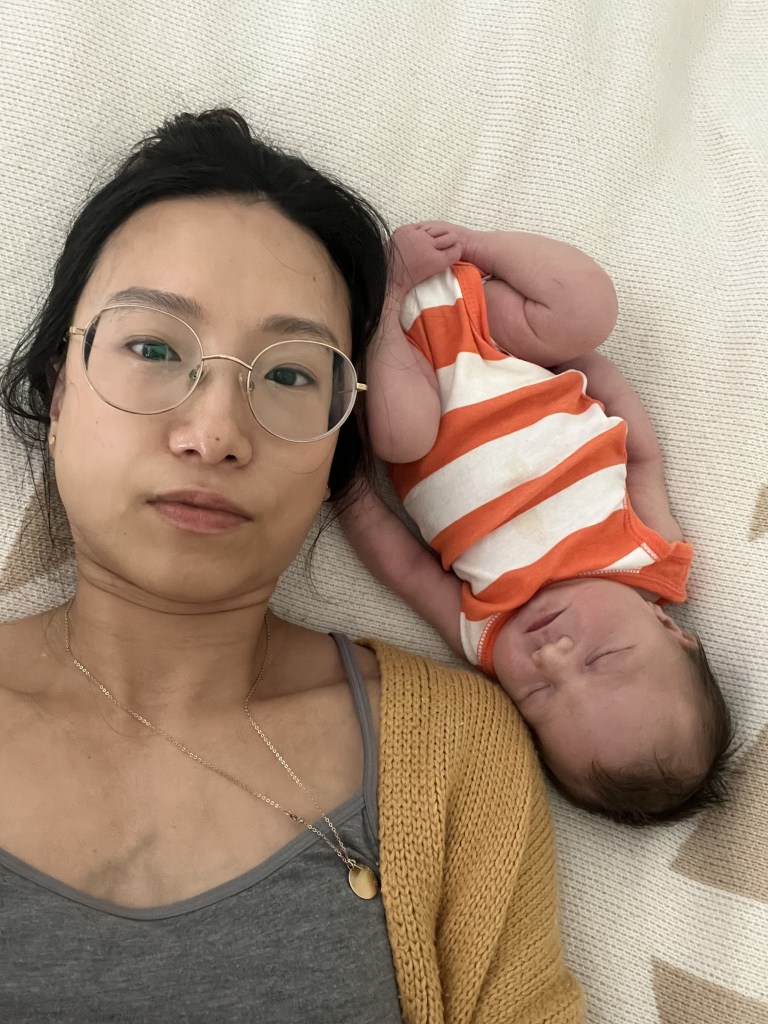
I’m currently 37 weeks pregnant.

It’s the longest I’ve been pregnant, though I recognize that’s a silly thing to say, as this is “only” my second pregnancy, and perhaps my last, depending on whether David’s threat to get a vasectomy plays out or not.

At 37 weeks pregnant, I am sleeping surprisingly well, despite waking up a few times at night to pee. The baby is sitting so low in my pelvic region that the ob/gyn has a hard time finding her heartbeat. And because this baby is essentially crushing my bladder like juicing a lemon, every drop of liquid I consume is squeezed out of me in about five minutes. I have a dull, throbbing ache on my lower back that fires shooting pain down the front of my leg if I stand still, which makes cooking, grocery shopping, even showering painful and uncomfortable.

Really, my symptoms aren’t that bad, but already I am over it. I have new respect for women who have carried their child (or children) for more than 41 weeks. I am more than ready to push this baby out. You can come out now, baby! Out out out!

But then, other times, I wonder: What’s the rush? Am I really willing to trade backaches and leg pain for weeks of sleep deprivation and soreness and exhaustion? And also…just as I couldn’t imagine Tov as a human being before he was born, I still have a hard time imagining my unborn daughter as a real person– someone with her own personality and voice, her own features and desires, someone with whom I will fall in love as fiercely as I did with Tov.

When Tov was first born, I was emotionally numb. I didn’t feel that overwhelming sensation of love, of claiming him as mine. It took a few days for my emotions to finally awaken, for me to look at his red, scabby little face and think, My son. It is really hard for me right now to imagine loving my second as much as I love my firstborn, though I’m sure that love will come just as powerfully and unconsciously. Even so, there’s a part of me that’s mourning a little, because I know I won’t have as much time and energy for Tov once this baby is born. He’s growing up so fast, and I’m not even ready for that.

I think that’s why I felt this sharp pang of sorrow when Tov came back from the kids hair salon one afternoon with a drastically different haircut.

Tov has dark, straight, thick hair that falls in shiny curtains around his face. The last time we cut his hair was in May, and since then, his bangs have grown past his eyes, and he looked like a young Justin Bieber. David took him recently to a kids hair salon and asked for a trim. Just a TRIM, he said. Instead, the woman picked up a buzzer and shaved off all his locks down to a fuzzy crew cut within three minutes.

I had just finished showering when David arrived with Tov. I turned to greet my son as he walked into the bathroom, sucking on a cherry Tootsie Roll Pop, and I could barely recognize him. Gone was my cute Asian boy with a bowl-cut acorn hair. In sauntered a teenage punk with a buzz cut. He now looks more impish than cute when he smiles, more like he’s about to go set the woods on fire than draw on our white couch with a blue marker. He went to the hair salon my sweet little Tov; he came back a stranger.

I was horrified. I was upset. But mostly, I am sad.

It’s been five days since his haircut and I still can’t get used it. I think the fact that I’m already anticipating so many changes and transitions to our lives, to Tov’s life, makes me react more strongly to his new look. I love this 27-month-old Tov as much or even more than the 24-month-old Tov and the 12-month-old Tov, and I will love the 30-month-old Tov who will by then be a big brother, but I miss all those old Tovs, too.

Looking at Tov’s suddenly grown-up face reminds me of all the great changes to come: the day he loses his little boy’s voice, the day he loses the baby fat in his cheeks, the day he sprouts whiskers and fur on his legs, the day he no longer runs to hug me around the legs, or cackle when we play “peekaboo,” or giggle at the silliest things, or worship me, or cry about things that don’t matter like not having his truck in his crib, or collect acorns and pinecones in his blue bucket, or cuddle with me in bed watching Miss Rachel sing “Wheels on the Bus.”

This new face fast-forwards me to a strange, unknown, grown-up Tov. Will he still look up to me with adoration, or find me annoying and ignorant and old? Will he still want to hang out with me, or prefer spending all weekend and holidays with his friends and eventually, disappear to create his own family? Will he still be sweet and affectionate and cheeky and bright, or will he be moody, troubled, angry, resentful, envious, unpleasant? The reality is, he will be all of those things at some point, and there’s nothing I can do about it, except intentionally enjoy and be grateful for each season I have with him.

It’s the greatest tragedy of parenthood, that we devote everything we have into creating and raising a life only to set it out into the cruel world.

I can birth two dozen babies, and I’ll nestle them into my chest as soon as they enter the world with a shriek, but the moment they learn how to walk, every one of them will learn how to scamper away from me, away into independence, away into their own lives and worlds of which I have little say and control.

If that’s the greatest tragedy of parenthood, the greatest challenge is to somehow be at peace with that fact, and entrust them into the Lord’s hands.

Why won’t you just EAT

Two Sundays ago, we got together with two church families for our first book meeting, in which we discuss Jonathan Haidt’s The Anxious Generation. We thought the easiest way for us to be able to meet and chat was to hang out poolside, letting our young kids aged 9 months to 6 years old to splash around at the pool while we snack on fruits and sunbutter sandwiches and talk about the impact of social media and screen time on young minds.

We had a good discussion, but I also felt myself feeling rather agitated and frustrated– not because of the content, or the company, which was wonderful, but because I was watching my friends’ toddlers, both several months older than Tov, hang out close to the snack table while Tov was way more interested in splashing in the pool.

By then I knew that Tov had skipped breakfast, had eaten one mini dried fruit bar in the car after church, and then had consumed nothing else. Meanwhile, these two other healthy toddlers, both bigger and chunkier than skinny Tov, grabbed fistfuls of blueberries, downed a bottle of juice, and chomped on not one, but three, four pieces of sunflower butter sandwiches. All the while, Tov was expending all the calories he didn’t ingest by scampering and jumping around, totally disinterested in the food.

“Tov, you want to eat something?” I called out to my son, and he shook his head and said his new favorite word to every question: “No.”

Eventually he came by my side to the snack table, drenched and sunburned, and I was able to get him to eat some watermelon, on which he nibbled a few squirrely bites and then handed the rest of the chewed-up chunks to me.

“Try some sandwich,” I begged, holding out a small piece, and he shook his head, “No.”

He licked on some blueberries, spat some out. Nibbled on some watermelon, and then tossed most of it onto the table. The sandwich I had offered to him sat crusty and dry before me.

He was driving me INSANE. He’s got to be hungry by now! He’s eating 1/5 of what other kids his age eat, and using up three times the energy! Why the heck wouldn’t he just freaking EAT!

I had been noticing Tov’s declining appetite for a couple weeks by then. Because he still was his happy and energetic self, I didn’t worry much at first. He’s always been a good eater; some days he ate less, but he naturally ate more the next day. He’s been getting pickier about what he eats, but that’s pretty normal for toddlers his age, and I just did what the experts advised: Keep offering new foods, including vegetables and meat he won’t touch, but don’t ever pressure him. Simple breezy easy.

And then one day of not eating became three days, and then a week, and then two weeks, and by the time we were at the pool for our book club, I was observing every morsel touching his lips like a hawk. I was starting to do what the experts told me not to do: I was starting to stress, and the stress steamed off my pores like fresh-boiled potatoes, burning both me and Tov and others around us.

I told our nanny that he hasn’t been eating, and she shrugged. “He’s never been a breakfast person,” she said.

I gritted my teeth. “He’s not eating lunch either.”

“I don’t like fat babies,” she said. “He looks fine to me.”

“The doctor said he’s pretty underweight,” I said, feeling an irritation heating up into a volcanic rage. She sees how little he’s eating, doesn’t she? He’s not eating breakfast, he’s not eating his snacks, he’s barely touching his lunch. “He’s not really been eating much for dinner, either.”

“Oh!” our nanny said, starting to look concerned. “I didn’t know he’s not been eating dinner either. I didn’t know it was that bad.”

From then on, she made a concentrated effort to get Tov to eat. She chased him with a piece of bread in her hand, going, “Mmmm! Bread! You want some bread?” and it turned into a game for Tov, who ran in circles around the living room giggling, and of course refusing to even taste the by-then soggy, wretched-looking, wholly unappetizing bread. In the end, she would put him down for a nap with his stomach empty, his breakfast and lunch plates still full and congealing and attracting fruit flies.

A week after that poolside hangout, his appetite dropped even lower, if that was even possible. He didn’t even want his milk. He had a low-grade temperature and was clingy, simply wanting to be held and rocked. I took him to the doctor, and turns out, he has strep throat. His pediatrician said the back of his throat is swollen, which makes sense why he completely lost his appetite, but she said it doesn’t really explain why he’s been eating so little for the past few weeks. That just might be normal toddler behavior, she said. She put him on antibiotics and Tylenol/ibuprofen, and said he should be feeling better in about three days.

The next day, after a full day of not eating again, our nanny tried to wake him up from his nap, and he barely stirred. She rubbed his back, stroked his cheeks, called out to him, but he lay like a stone in his crib, eyes shut tight. She got frightened and called me and David. When David picked Tov up from his crib, his head lolled backwards, limp, but thankfully, he later woke up crying, and we were able to get him to drink some water and milk.

I took him to the pediatrician again, and we found out not only does he have strep throat, he also developed hand foot mouth disease. He had no sores or rashes on his body, but there were two painful-looking white ulcers on his tongue and uvula.

“No wonder he’s not eating,” the pediatrician said, eyes filled with pity. “He’s in a lot of pain.”

I felt my heart break, held the poor boy close. “Oh, I’m so sorry, Tov.”

Even then, I could not break from my obsession with making sure he eats something. I ran to Whole Foods and Trader Joe’s and paid too much money buying things that I rarely let Tov eat: popsicles, juice, sweetened yogurt drinks, ice cream, soft white bread– anything that would be cooling and easier to eat. What kid doesn’t like popsicles and ice cream?

Well, Tov.

He licked the popsicle but then let the rest of it melt into a bright purple puddle. He would not even touch the bread. He took a few sips of the juice and then left it sitting on the table. He spilled the yogurt drink into another bowl and smacked his hand into the pink liquid, splashing the sticky substance everywhere.

My friends and the internet gave me advice on how to get a sick, low-appetite toddler to eat or stay hydrated, and I got frustrated because I had already tried it all. None of them works.

How does he not like popsicles? One friend exclaimed.

Because, I thought, he’s torturing me. He’s being a stubborn ass. He won’t even try it because he knows how much I want him to eat, and that makes him even more stubborn not to.

Stubborn…like his mother? one friend joked.

Ha ha. Touche.

But it was really eating at me. I was worried, but my love and worry for Tov stormed out in the form of rage. I wanted to throw a tantrum. I wanted to scream every time Tov said “no” to anything I offered him. I wanted to smash things when Tov left his plate untouched, when he squeezed the juices out of his watermelon without bringing it anywhere close to his mouth, when he spit out whatever I was able to put into his mouth.

And at times, I did throw a mini-tantrum. My voice sharpened. My face turned smoky. “Fine, just starve!” I exclaimed at him. I smacked his plate over the trash can to dump his food out and flung the dirty plate into the sink. I stormed into my room and banged the door shut before I completely erupt in front of Tov. I retreated to my desk, my body shaking with frustration and anger.

“Mama gone,” I heard him tell our nanny.

I sat at my desk, trying to return to work, but heart and mind swimming with mad, pulsating emotions and thoughts: Why won’t he even try to eat? What if his eating is always going to be like this, because I’m pressuring him too much? What’s wrong with him? What’s wrong with me? Why am I so angry? Why am I acting like a bitch? What if he senses my displeasure and frustration, and gets scared of me? What if he develops an eating disorder because of me?

I knew Tov is sick. I knew it probably was uncomfortable for him to eat. He did nothing wrong, but for whatever reason, a part of me still blamed him, thinking it was a behavioral issue, for the simple reason that he was not doing what I wanted him to do. I could not bend his will to mine. He was his own person, and no matter how much I wanted to force something that I know is good for him on him, he ultimately makes the decision.

I got a bitter taste of parenthood then. So much of parenthood is accepting the fact that I cannot control my kid, cannot control the situation, and often, cannot even control myself. It’s also acknowledging how selfish I am. Even my love is selfish, and can oppress my kid in self-serving ways. I want Tov to eat for his sake, but also for my sake. I want to feel the relief. I want to be appeased. I want to feel the satisfaction of feeding my kid well.

It bothered me, how selfish I am even as a mother. I’d always thought with motherhood comes this supernatural, self-sacrificing, all-giving, all-encompassing holy love. A mother’s extraordinary love is fabled in the news and social media and novels and poetry and songs. I have a powerful, instinctual love for my child, but it’s also a broken kind of love. It’s a love that can get twisted, can oppress, can consume, because the lover herself is a broken person.

I thought about this a lot this week, praying through it, asking God for help and patience. I also repented.

Last night, before I went to bed, I crept into Tov’s room while he was fast asleep on his stomach, his little fist crooked beneath his chin. I stroked his unruly hair, his smooth cheek, his sweet eyelashes. Even though he was deep in sleep, he subconsciously sensed my presence, and he stirred, reached out, and grabbed my hand. My love might be broken, but he was still made to receive my love, and my love I will give, though Lord help me, purify and sanctify this love I have for him.

I sat next to Tov’s crib, holding my precious son’s hand, and felt tears drip down my neck.

“I’m so sorry, Tov,” I whispered to him. “Omma is so sorry.”

He breathed, in and out, in and out. And I sat there for a while, stroking his little hand, simply loving him for who he is.

Why do I want more kids?

Last night I had dinner with two church friends. We are part of the same discipleship group, and we really are a good match: We all are boy moms with a son under 2, we are all working moms, and though we are very different in personality, we share similar values and sensibilities.

One is currently about 34 weeks pregnant, the other is already trying for a second child, and me? David and I aren’t trying, because we can’t–at almost 16 months postpartum, I still haven’t gotten my period back, and there are zero signs of ovulation. When I told my church friends that I was starting to feel anxious, wondering if I am infertile, one friend asked me, “You want more kids?”

“I want two more,” I said definitively, surprising myself. Before I had mentioned having three kids, but that was more like a half-joke. This was the first time I had seriously declared out loud that I want to expand my family. How I’ve changed. What is happening to me?

This is a weird period. It’s that season when everyone in a similar life stage as you are already pregnant with their second, or trying, or determinedly not because they have decided they are good with just one. I see more people in the first group. Just like when I found out I was pregnant and I started seeing pregnant ladies everywhere, I am now seeing women pregnant with their second everywhere– on social media, at church, in friend groups, at grocery stores– and what I feel isn’t jealousy or envy, but rather, waves of longing that roil inside me, a discomforting sensation that strangely feels a lot like nausea.

I tried to explain to David why I feel this way, and I found I didn’t really have the words. The desire is almost primal, as instinctive as wanting water. It comes especially when I’m with Tov, watching him burst out of his baby stage into the toddler stage, like a little chick flapping out of its shell, ready to hop and chirp and skip the moment it’s out into the world. Tov graduated from crawling to walking so suddenly, lifting himself overnight from his knees and hands to stomping around the house, his little feet going boom boom boom and his little hands already almost reaching the kitchen countertop and his energy as loud and rambunctious as his cackles of laughter. Almost overnight, too, two more teeth popped beside his two lower teeth. And just as suddenly, he was saying his first real word: “This! (pointing at the remote control he spies on top of his book shelf) This! This!” When he scrambles away from my arms to grab some other random obsession he spies, I see the back of his head, full of tufty brown hair that sprouted in the last several months.

As I watch Tov grow into a full-fledged boy, no longer a baby, I feel that wave of nausea-like sensation. I miss him. I miss his two-teeth goofy baby grin. I miss his army crawl. I miss his softer, gentler newborn cry. I miss his bald head with the hilarious patch of hair on the front. I miss the person he was two minutes ago. I am constantly missing him, nostalgic for the present even before it slips into the past. No, don’t go yet, I want to say. I haven’t fully enjoyed all of you yet.

It’s strange. I miss the previous Tov, but I love the current Tov more. My love for him keeps growing, yet so does the nostalgia.

Motherhood has radically changed my perspective on children. Psalm 127 describes children as arrows in one’s quiver, a heritage from the Lord, a reward. I never really got what that meant, and it’s still a surprising metaphor to me, likening children to arrows of a warrior, but like the assurance a warrior feels in battle with a fully-loaded quiver, Tov brings me assurance. Motherhood has secured my feet as I walk my life. It has sunken them into the earth with the weight of parental responsibilities, but also toughened them, strengthened them against the thistles and creatures in my path. I am less flighty, less idealistic, less dreamy as I was in my youth, but also more content, more secure, more assured, not because I now have the identity of a mother, but because that’s what happens, I think, when you love and invest in a God-given life that requires sacrifice of sleep, time, self-interest, comfort, and convenience.

I tried to describe that to David during our walk, but very inadequately. “Would you be sad if we couldn’t have any more kids?” I asked.

David made his characteristic “let me rustle my brain for a few seconds to think” noises and then said glibly, “No.” He gestured at Tov, who was looking up at us with wide eyes from his wagon. “I mean, look at him. He’s perfect. I’m content if it’s just Tov.”

Yes, he’s perfect. So wouldn’t one or two more of this perfection be even more wonderful?

“I would like to have a second kid, but I can’t imagine having another kid, just like I couldn’t imagine having Tov before we had him,” David said. He was also getting anxious thinking about the added burdens and stresses of expanding our family. As of now, he was just grateful to have Tov, he said, mentioning friends we know who are struggling with infertility.

I am too. Grateful. Because before we had Tov, I found children annoying and inconvenient. Because after we had Tov, I found he can indeed be annoying and inconvenient, but even when he’s waking me up from a deep sleep, or disrupting my plans, the feeling of wellness and fullness when he reaches for me far supersedes those irritations. Because less than two years ago, I envisioned a future free of all this, planned for it, and then God surprised me with something I never asked for.

But am I content? Why this slow-burbling anxiety that I won’t be able to have another?

I don’t think it’s bad that I desire more children, when the Bible itself declares that “happy is a man whose quiver is full of [children].” As always, the human heart is complex, stitching complications into good and healthy fabric. The desire for more is natural, God-made, healthy, but I’m punching holes into that desire with fear and distrust that essentially questions the character of God: I’m grateful to God for giving me this unexpected gift, but I can’t help wondering…maybe God will intentionally withhold more such gifts to me because I hadn’t wanted them in the first place.

Because sometimes I see God as an exacting judge. “Well,” I imagine Him pronouncing, in his judicial robes, “I’ve given you this measure of happiness, so that you’ve learned your lesson for poo-pooing motherhood, but now I’m sentencing you to the same measure of sadness, so you once again learn your lesson for poo-pooing motherhood. That’s what you get for being selfish, but see, I’m being rather generous, since I could have never given you a child at all.”

Or I imagine him as an ambitious coach. “OK, Sophia,” I imagine him huffing, blowing his whistle, “You’ve run 200 laps. But here are 200 burpees you need to do, because it’s good for you, it’ll make you stronger to experience the pain of infertility, because then you can truly bless them all, the mothers and the childless! For the good of the Kingdom, go go go!”

What a twisted vision of God. All my life, God has shown me boundless grace and compassion and empathy, and has even given me a glimpse of how far and wide and deep his father’s heart is through my own mother’s heart, and yet, at only 16 months postpartum, before even the first real roadblock to fertility, I let the serpent plant a seed of doubt in my heart: Did God really…? Is God really….?

If God really is the all-compassionate, all-loving, all-knowing Father he’s revealed to me, can I not just rest in that? Rest not just in the hope that he will answer the desires of my heart, but rest also in the hope that even if my heart’s desires aren’t fulfilled, he will surprise me yet again with something just as unexpected, just as wonderful, something just as intricately and uniquely designed to pull me down to my knees in worship, exalting him for who he is?

In a way, David is right: We should be content. We should be grateful. But I noticed that I was already trying to precondition my heart to be “content” with Tov by listing all the benefits to having only one child: We can devote all our resources and time to Tov; we don’t have to look for a bigger house; I don’t have to worry about how having more kids will impact my career; my body won’t sag and stretch more from more childbearing (though I’m sure it will from aging). I was reciting this list to myself to in a way brainwash myself into “gratefulness” and “contentedness.” But that’s not genuine contentedness. That’s distracting myself from my discontentedness.

What does it look like to be truly content, even as I allow myself to desire and ask for more?