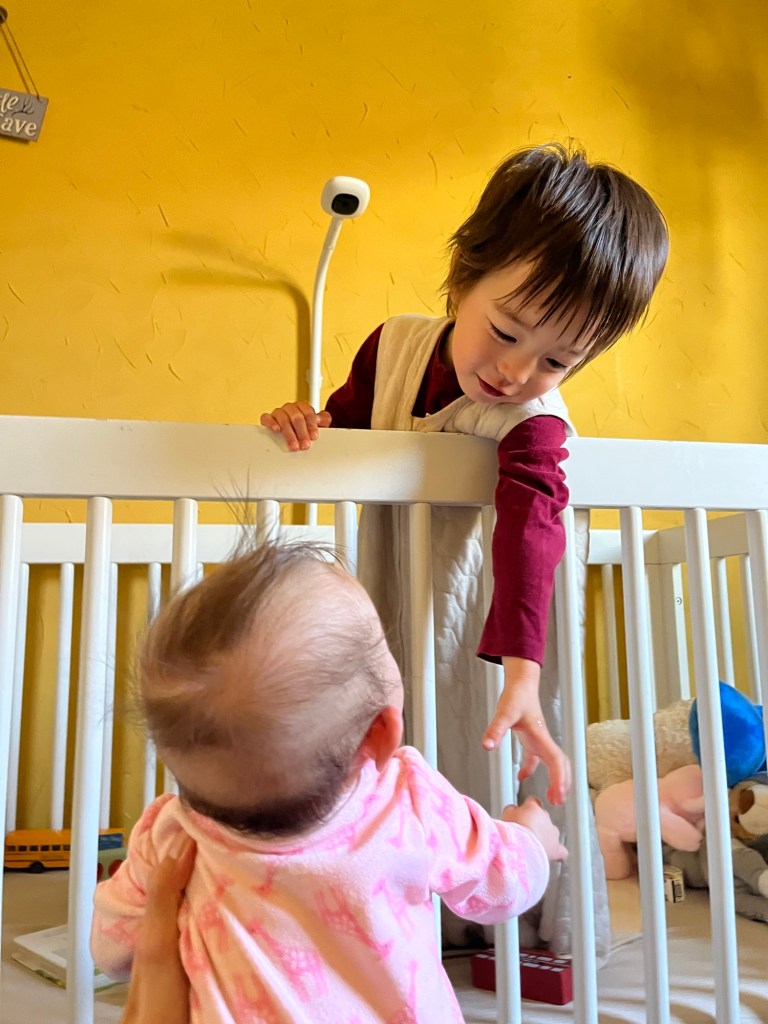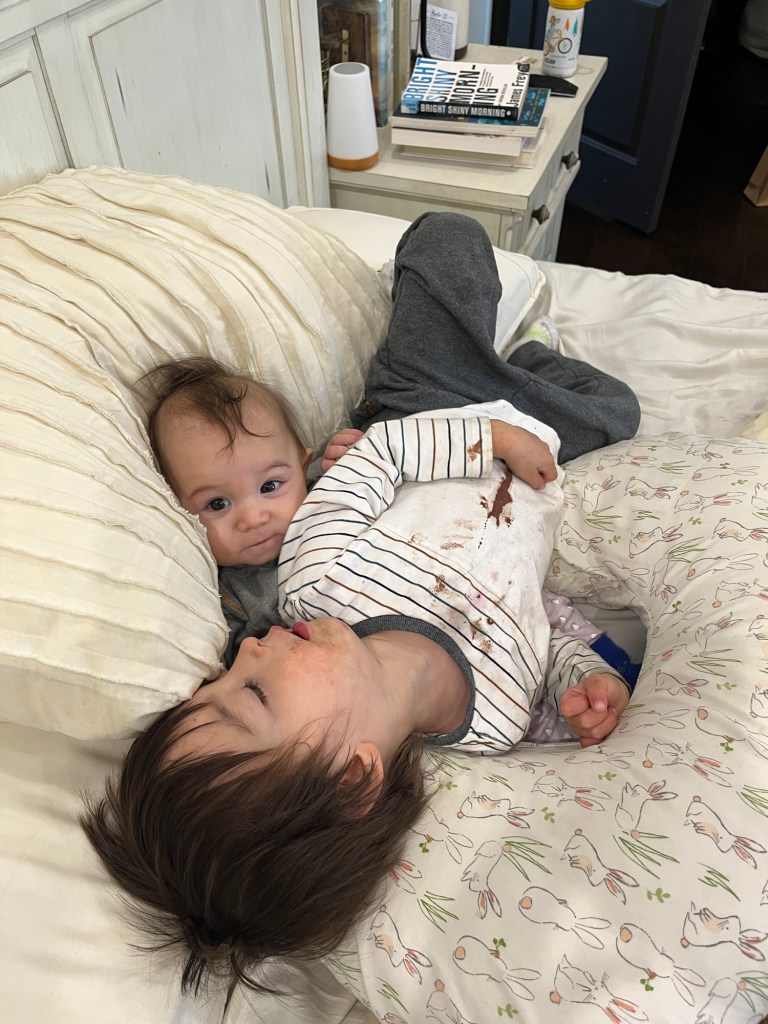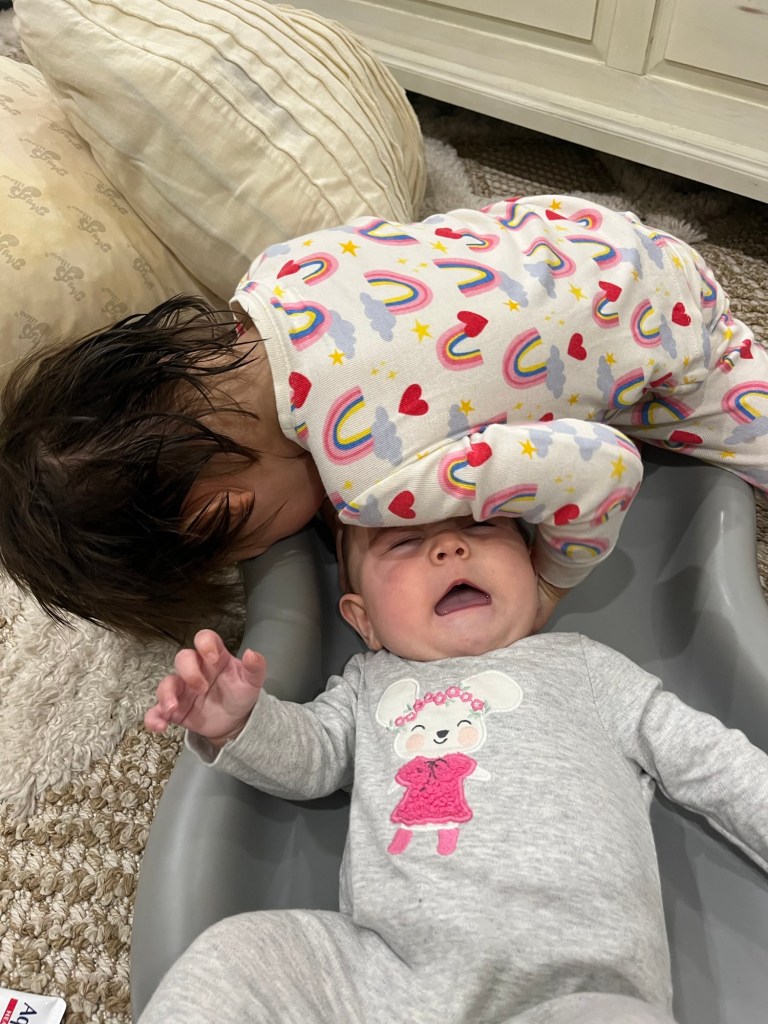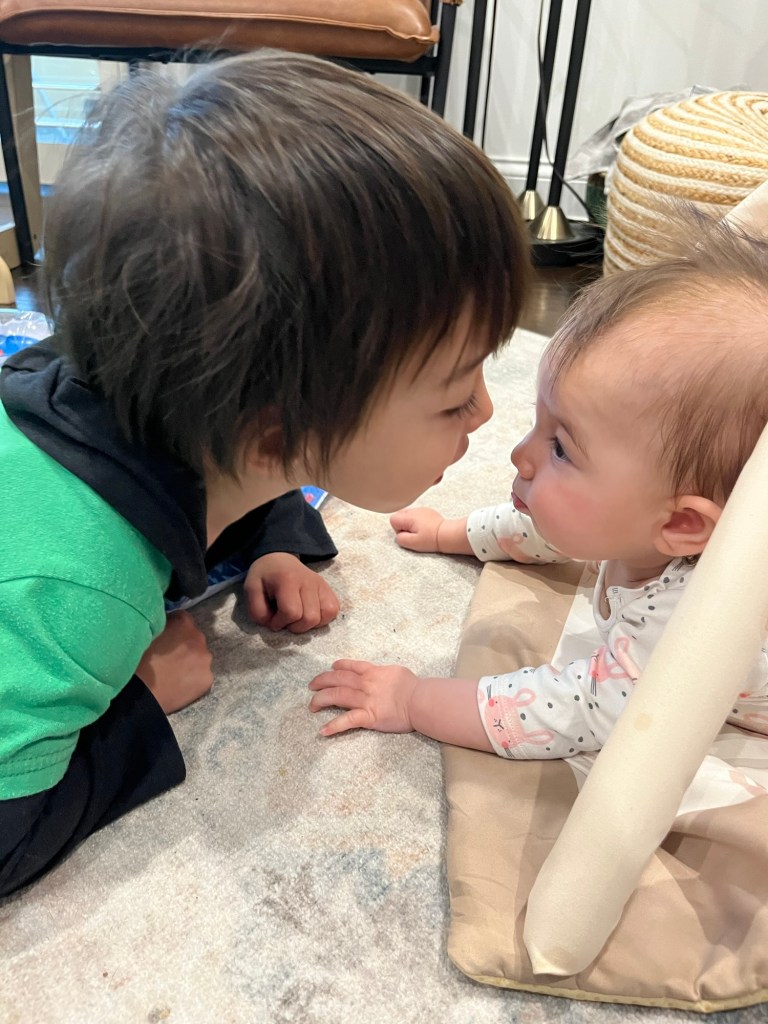

Woori has been going through a sleep regression the past three weeks or so, exacerbated by teething. Like clockwork, at about 12:30 am, she wakes up screaming. And from then on, she wakes up every hour or two hours.
In the past month, she also stopped napping in her bassinet. She doesn’t even last 5 minutes before screaming and flailing so hard she’s breathless and hyperventilating.
All that to say, I am a walking zombie. I wake up in the morning groggy, with that deep-in-the-brain ache because my brain has barely been able to shut off all night. My body and hormones are off, because I’m night-sweating again, waking in a soaked T-shirt. I’m almost falling asleep as I drive Tov to school. Often, I pass out half-dead with lurid dreams while holding Woori in the nursing chair. (Somehow, I still have energy to read novels late at night, but that’s the kind of nonsensical superpower parents have when we are liberated after putting the kids to bed.)
It’s been hard, but honestly I don’t really have the mental and physical energy to even think about how it’s hard. I just go on, putting one foot before the other, day by day, dragging my weary body through the mire of parenthood.
There have been moments of lucidity though. I remember one morning, as I heard Tov having a tantrum with David in his room, and Woori starting to fuss in bed with me (we co-sleep now— it just keeps everyone sane), and felt the bunched-up clammy sheets under me, and raked my hand through my damp, disgusting postpartum hair, probably pulling out 237 strands of hair that I don’t have to lose, all of a sudden, this thought came to me: “These are the best days of my life.”
It’s cathartic to complain about parenthood, especially those early childhood years, when everything is a struggle, from shoving a sweatshirt over a screaming, snotty toddler’s head, to driving stressed because the baby’s shrieking like a banshee in her car seat and there’s nothing you can do about it. Complaining about the hard moments of parenthood is viral content on social media— I enjoy them; I enjoy commiserating and sharing them with my fellow moms and dads. It brings much-needed comic relief to a period that feels so long and consuming.
But still. These will be the best moments in our life.
When I was young, I could not wait to grow up. I wanted to be independent, to earn my own money, choose what I want to eat, where I want to go, without asking my parents for permission.
Meanwhile, my childhood best friend dreaded growing up. “I want to stay a child forever,” she told me. She liked her cocoon of innocence and lack of responsibilities, liked the assurance that someone bigger and wiser is taking care of her.
“You’re stupid,” I told her, with all the eloquence of a 9-year-old. “Or crazy. Why would anyone ever want to stay a child?”
She gazed with longing into the past. I gazed with impatience into the future.
And I’ve lived like that since. I’ve always been impatient for what’s next, what’s new. When we immigrated to the United States, I eagerly kissed everything and everyone in Singapore goodbye. Next! In high school, my actions and thoughts were all set towards preparing myself for college. Next! Once in college, I couldn’t wait to graduate and be done with school forever, and kickstart my career. Next! Then once I got a job, I was never content in my career. I wanted to work in someplace more prestigious, and lived in constant frustration of feeling stuck in my job, watching with envy when my peers seemed to hop on to shinier opportunities. Next. Next. Next!
What’s next? What’s new? Is this it? To what end I was working towards, I did not know. What was the achievement that would finally satisfy me, to make me relax and say, “This is it,” what was the accomplishment that would allow me to start enjoying what I have, I do not know. I was just perpetually restless, rootless, reaching out and out.
And now. As a parent, as a mother of a 2.5-year-old and a 5-month-old, I seem to do both, looking both forward and backward. I look at old pictures of Tov and my heart aches. Sometimes he looks up at me a certain way and I lose my breath; I’m so shocked at how boyish, how non-toddler his expression is. My boy is growing up before my very eyes, and I am still caught off guard by how fast.
Even as I hold Woori, who blessedly still fits in my arms and stays where I put her, I am already mourning, looking into to the near future when she’s 2 like Tov and Tov is almost 5, and I feel nostalgic for the very period I’m currently in.
Parents have talked about the importance of “soaking in” every moment, but I feel like every moment, even as I’m living right in it, keeps slipping through my fingers like water. Rather than soaking, the moments seem to flow out like a stream, and all I have are pictures and reels on my iPhone as memories that are memories because they are already in the past.
Yet at the same time, I’m still planning my future, wondering what’s next. When are my kids going to be independent? When can I start having my time back, my body back? When can I restart my career? When I can have my mind and creativity back? When can I start writing again? And because motherhood makes you insane, I also wonder: When can we have a third baby?
Perhaps the present moments keep slipping me by because I keep looking back to the past and out into the future, but rarely stay still to enjoy the present. Honestly, I don’t know how. I haven’t practiced that enough to suddenly do it now.
Which brings me to that morning when I woke up feeling that heaviness of trying to swim upstream, facing the new day with exhaustion, and that seemingly random thought came to me— that these are the best days of my life. I was startled by how strongly this sentence entered my mind, so I took it as a conviction from the Lord, and I thought of Ecclesiastes: “Hevel, hevel, all under the sun is hevel.”
Working hard on a career is hevel, or meaningless, or vanity. Marriage is hevel. Raising kids is hevel. All in life is hevel, unpredictable and fleeting, impossible to grasp and control. So I was right: It is hard to “stay in the moment” because time keeps moving, tick tick ticking along even as we practice meditation to “be still.”
But there’s still joy found in the hevel, Ecclesiastes tells us: “Light is sweet, and it is pleasing for the eyes to see the sun. Indeed, if someone lives many years, let him rejoice in them all, and let him remember the days of darkness, since they will be many.”
I love how realistic and grounded Ecclesiastes is, at once exhorting us to enjoy what we have while also acknowledging that life feels futile and hard. Yes, we are all drawing one day closer to death every day. We all die, including powerful filthy-rich smart-alec jerks like Elon Musk and saints like Mother Teresa. Death is the ultimate equalizer; as terrible as it is, it is fair.
Accept the hevel, accept that time is passing us by, accept that a lot of things that mean so much to us will not mean much after we’re gone. Enjoy our remaining youth while we can. Work hard while we can. Enjoy our bread while we can, and enjoy the sun when it’s out.
And always remember: “Fear God and keep his commands, because this is all humanity. For God will bring every act to judgment, every hidden thing, whether good or evil.”
“Judgement” sounds so ominous, but not when the judge is God, who is perfect in every way. This perfect God sees it all. He sees me nursing Woori at 4 am. He sees me packing Tov’s lunch in the morning before my first cup of coffee. He sees me holding back my temper when Tov is having a tantrum. My kids will not remember all these little acts of service, and if I’m banking on my husband or society to acknowledge everything I do, I’ll become bitter and petty. But God does. He sees what I do, and He also sees right into my heart as I do these daily domestic duties.
As I slide into the early stage of middle age, as the rosiness of youth wilts, as I gain hard-lived experience and knowledge with every fine line and wrinkle, I want to remind myself that I’m living the best days of my life.
One day I’ll look back and miss these days when I can still carry Woori on one hip, when I can cuddle and smother Tov in kisses while he giggles, and hopefully, hopefully, by then I would have gained enough wisdom and contentment to be able to miss the past yet also wake up every morning declaring, “Today is the best days of my life.”