
The so-called woman’s curse

The baby has been moving a lot more these days, especially at night when I’m in bed.

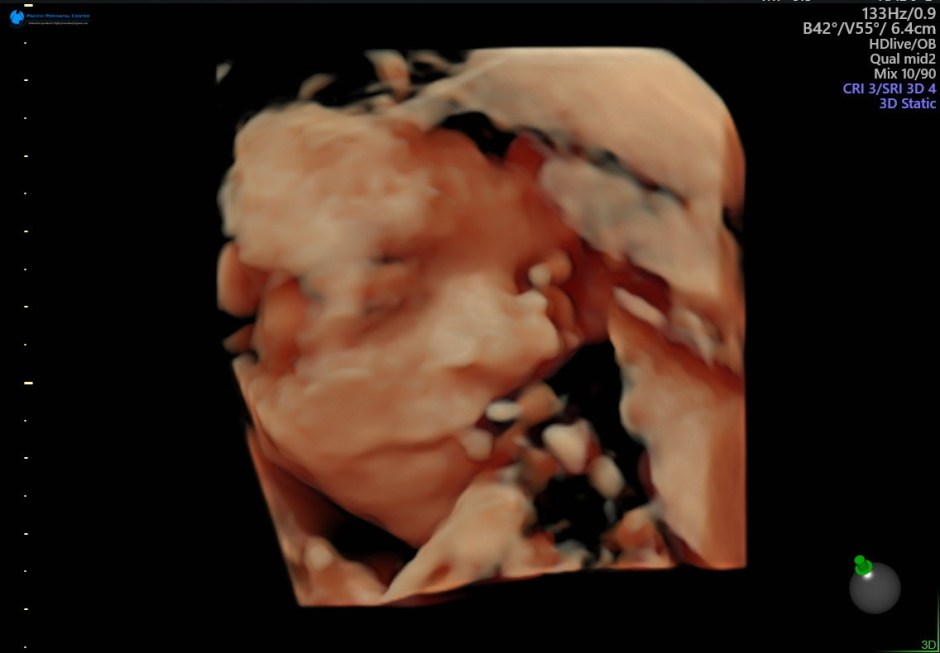
Sometimes I wish I can carry an ultrasound around with me to see what the heck the baby is doing. Is that a fist jab or a tiny foot kicking or a hip bump? Sometimes it feels like the baby is doing a little gymnastics routine, other times it’s either backpedaling or breast-stroking, and then sometimes I’m pretty sure it let out a series of hiccups.

It is the weirdest feeling, and not all that pleasant, but neither is it unpleasant, nor painful, nor uncomfortable. It just feels really, really weird. Like there are fingers inside me, sliding across my organs as though playing a piano. Like there’s an alien developing inside me, which I suppose is pretty close to what is happening. There’s a living mini-creature swimming in the amniotic fluids of my uterus, gradually growing stronger and bigger by the day. What a bizarre thing to happen to my body, after 34 years of it being my own.

Everything feels abnormal. I can’t lay on my back anymore, can’t walk without feeling like my pelvic floor is literally going to drop to the floor like a heavy sack, can’t sit in any position that’s comfortable for long, can’t eat a full meal without feeling like my squished gut is going to pop out of my gullet. I’m only a week away from third trimester, and I shudder to imagine what it would be like to lug a watermelon-sized belly around for several weeks.

But there’s also wonder and awe: My body is creating a human being! Obviously I’ve known what a woman’s body can do, since I was a toddler watching my own mother’s belly grow with my brother, but now that I’m experiencing for myself all these biological changes, I’m astounded that I’ve never seriously considered the fact that billions of women throughout history, from all over the world, have been bearing and birthing children. That this is “normal,” just part of the natural cycle of life.

Now I see: I have been living in a world full of daily, constant, repetitious signs and wonders, and I’ve been blind to it. I see pregnant women waddling at the grocery store, buy gifts for my friends’ baby showers, celebrate the birth of my nieces– and I would be happy for them, but I didn’t once stop to step back and wonder, Wow. What magic. This is amazing. God is amazing! How ingenius is His creativity? How purposeful is the way He designed the woman’s body!

One of the first things I learned in Sunday School was Genesis 3: the curse of man, the curse of woman, the curse of the serpent. After Adam and Eve listened to the serpent and disobeyed God, God cursed Eve, “I will make your pains in childbearing very severe; with painful labor you will give birth to children. Your desire will be for your husband, and he will rule over you.” Well, jeez. No wonder I didn’t find marriage or child-bearing at all appealing.

Even as a kid, I was never impressed by the women in the Bible. There’s Sarah, the matriarch of Israel, who just seemed like a bitter, submissive woman who did whatever her husband told her to do. She pined away most of her life longing for a child, and then tried to claim her servant’s son before abandoning both of them to wild beasts in the desert. There’s poor pitiful Leah, whose beauty paled in comparison to her sister’s, so she desperately and pathetically tried to earn her husband’s love by bearing him son after son. There’s Tamar, whose greatest compliment was from a father-in-law who claimed her more righteous than he, because she tricked him into sleeping with her– for what? A son. Then there’s Ruth, who submitted to her mother-in-law by laying at the feet of a much-older, wealthy stranger, and oh boy, what did she get in reward? A son. There’s Hannah, who had a seemingly-devoted husband but cried bitterly at the temple each day…for what? A son.

In the New Testament, there’s Mary, whose single greatest act in her life, again, was giving birth to a son. Of course, that child was also the Son of God– and I can appreciate the trepidation she must have felt about what it meant to miraculously conceive as a young engaged virgin– but really, what other great thing did she do in her life besides host Jesus Christ in her womb? Did she lead the Israelites out of slavery in Egypt and blast sweet water out of desert rocks, like Moses? Did she sling a stone into a giant’s forehead, led an army on horseback into multiple battles, and rule over a powerful, prosperous kingdom, like King David? Did she, like Apostle Paul, travel across the Asia Minor, enduring shipwrecks and flogging and starvation and prison, planting churches and spreading the gospel to the world?

No, she did not. She squatted in a manger and pushed out a son. As a girl looking for female role models in the Bible, it seemed to me that the women exemplified as great figures of faith in the Bible were mostly all…mothers. Or wives. Or wives longing to be mothers– but not even daughters will satisfy them, only sons. The only truly badass woman was Deborah the warrior prophetess, and she doesn’t even get one-tenth of the space that most other men in the Bible get. I felt disappointed and dismissed as a young Christian female who admires and longs for chutzpah and charisma, aplomb and glory. Is this the best God expects out of us? To be wives and mothers? Surely, Lord, there’s more for us.

But I also felt uncomfortable with today’s societal expectation that we modern women should be able to “have it all.” That we can have our careers and independence and marriage and motherhood, that we can balance both the traditional masculine accomplishments and our femininity/sex appeal. Sure, it’s challenging to balance all those responsibilities, but a strong able woman makes it work somehow, so yes you can, you beautiful badass queen! That idea feels just as oppressive as the idea that a good Christian woman’s place is at home organizing Easter plates and homeschooling five kids, bonus points if you can play hymns on the piano and have adopted kids with disabilities from Russia or China.

Of course, the hubris in me still aims to be that woman who manages both motherhood and career with breezy class. We all (or maybe it’s just me) admire Supreme Court Justice Amy Coney Barrett for “having it all,” yet also hate her guts for merely existing, for setting a near-impossible bar for us earthling women by not only projecting brilliance in her academics and career path, but also somehow raising seven children, two adopted from Haiti and one with Down syndrome. I don’t know how she does it, but it makes my dirty soul feel better to believe that she cheated somehow.

I have been rethinking a lot of my low view on motherhood since I found out I’m pregnant. I don’t feel confident to call myself an omma yet– that still kind of freaks me out a little– but in bed at night, as I lay quietly feeling my unborn child do karate chops and somersaults, I don’t feel fear or anxiety. I feel awe. I feel wonder. I feel…like a miracle. Like I’ve been sprinkled with a fistful of magic dust. And I telepath-talk to the child, Hello there, little one. Are you for real?

What mystery– this powerful, magical thing a woman’s body can do. And I wonder, why us? Why did God choose to design the female body, and not the male’s, with the ability to do the most supreme thing any human being can ever do: create life? Nothing God does is accidental– He is an intentional creator, an unmatched imaginator who designs and builds with precision and purpose.

So I ask again: Why us? Why woman? God could have easily made both men and women able to bear children. But instead of choosing the man, the “stronger” sex with the (typically) bigger bones and muscles, God chose the “weaker” sex, the woman, to endure one of the most amazing and taxing experiences on the human body. And women throughout millennia, short and tall and big and small, of all race and ethnicities and ages and socioeconomic background, have continued the miracle of life by the natural functions of their bodies.

But that act is not without pain and sacrifice. I think of the Genesis 3 curse, the pain of childbearing– and from everything I’ve researched, pregnancy, labor and birth, and the postpartum stage do sound rather awful, even with medical advances such as the epidural. All that fluids and organisms that come out of us? Gross! Our body is rarely ever the same after we tear our body apart to push out a fully-formed human, and neither does our heart completely heal from the all-too-common traumas of miscarriages or stillbirths or infertility.

Yet even with all that discomfort and anguish and lifelong scars, the Genesis 3 curse does not erase this mindblowing marvel: The woman’s potential to bring life to earth. And to me, the most incredible thing about this act is the amount of self-sacrifice it takes. Think about it: The most powerful thing a human body can do is inextricable from self-giving sacrifice, from the uncomfortable symptoms of pregnancy to the searing pain of labor and delivery, and then the long, aching process of recovery while nursing a newborn who gives nothing but demands everything.

Even the so-called woman’s “curse” has redemptive, gospel characteristics embedded in it. I see God’s goodness and wisdom in this “curse”– that His ultimate purpose isn’t to punish and inflict pain, but to redeem and glorify the woman, and kiss her with an embodied taste of His own self-giving sacrifice when He willingly died on the cross for us. With this ability to bear child is God’s desire to make His heart known to us in the most intimate, visceral way possible.

And so the woman’s weakness is her strength, her suffering her crown. God’s “curse” becomes a blessing, one designed specifically just for the woman. Not something to ever poo-poo at, even if she never becomes the second-most powerful man in Egypt like Joseph, or builds the temple and composes wisdom literature like Solomon did.

Are you excited?

Yesterday at church, just before Sunday service began, my lead pastor came up to me and said, “So I heard the good news! Are you guys excited?”

And I stared up at him with startled eyes, shaken awake from my mental menagerie, and did not produce the typical enthusiastic response that most soon-to-be parents give. “Oh! Uh, yes,” I answered, my voice heavy with hesitation, “I think I’m getting there.”

My pastor looked taken aback, and concern wiggled across his brow: “Oh, is this something you want me to pray for you about?”

Oh shoot, I thought. I’m giving off the impression that I don’t want this baby. I told him no, clarifying that I am excited, but there’s also been a lot to process all at once.

My pastor nodded. “Yes, I expect given that this pregnancy was unplanned, things can feel so disorienting.”

Disorienting. That’s the word. “Disoriented” is how I would sum up everything I’ve been feeling in the last four weeks since I found out I was pregnant and had to pee on a pregnancy stick three times to confirm that 1) Yes, there’s a baby inside me, not undigested tacos, and 2) Yes, I actually do want a baby.

When my pastor asked me if I’m excited, I was sitting alone at the pews after our morning pre-service prayer meeting, silent in my thoughts. I was not so much thinking as half-hearing the white noise of my subconsciousness. Those noises were loud, but in the background, and my mind felt numb and dumb in a mute daze. I was also uncaffeinated and tired, and almost fell asleep on the wheel while driving to church, so I was already sitting in a mental fog when jolted awake by a simple, predictable question from my pastor: Are you excited?

I am a too-honest person, unable to fake a response that I don’t truly feel, even if I don’t know how I really feel. I don’t know why I couldn’t have just responded to my pastor’s question with a big grin and a happy “YES!” Because yes, I am excited to bring a new precious life into this world. I am excited to meet this baby. But I’m not so excited to be a mother yet. Does that make sense? Disorienting, indeed.

I start a new job tomorrow. When I signed the job offer in January, I still had no idea I was already in second trimester by then. I took that job because after prayers and discussions with my husband, it felt clear that God opened that door for me. The job fit all the things I love to do: International travel. Meeting and getting to know people on a deeper level. In-depth, long-form feature writing. Highlighting inspirational, challenging stories of ordinary Christians who are living out the practical, powerful implications of the Gospel. I also really liked my future colleagues, and got a good vibe from the staff there. Plus: I was offered a significant salary bump, and the health insurance benefits were way better. “This job is a no-brainer,” David kept telling me.

So I signed that offer. I am to start on March 1, and I had been following the news in Ukraine, thinking it might make sense to do my first big travel story there, perhaps following some local Ukrainian Christians while tension between Ukraine and Russia simmers, to give it an extra newsy factor (this was before Putin did his monstrous thing). I even looked up Ukrainian cuisine. The world was flung wide open to me, and this job would be my magic carpet. I couldn’t wait.

Now I am disoriented. I had planned to continue working on a book for the rest of February, to maybe even draft a book proposal by the end of the month. But this month of February blew past like a gust of autumn wind, blowing my plans into swirls of dried dead leaves. I have not added or edited a single sentence in my book. I still haven’t finished reading the stack of books I had bought. Instead, I’ve spent countless hours watching YouTube videos on pregnancy stages, researching what newborn baby products I need, convincing David not to name our child after his favorite Dodgers player, and scaring the crap out of myself by reading up on perineal tears and cracked nipples and diastasis recti and stillborn babies and sudden infant death syndrome. I can’t say much of those hours were productive.

Overnight, my world has changed. Plans disintegrated. The future blurred. I don’t know what to expect for my upcoming job– how am I going to travel? Can I travel? When is too soon? What if my performance sucks, and my editors regret ever hiring me? Hiring a nanny would cost me my entire paycheck, and more. What if I need to decrease my work hours, and– horrors– quit my job?

On a recent phone call, abba mentioned the unmentionable: “You need to prioritize this child,” he said. “You might even want to consider quitting your job.” And then of course he said he’s praying for me to be able to handle that.

I wanted to scream. Of course I’m going to prioritize the child. But that added layer of “I’m praying for you”– that unspoken, unintended spiritual overhang of “this is what God wants you to do” and “this is Biblical” and “if you don’t do this, God will be displeased”– felt like a pillory around my neck.

I remember all the disdainful, disgusted condemnations many Christians heap on modern-day feminists and career women, for supposedly abandoning the family’s well-being to pursue their own ambitions and desires. A woman I had just met, who is also pregnant, told me how she used to be so selfish and worldly as a single woman until she reformed her relationship with Jesus, and realized she wants to be a wife and mother. She hopes to quit her job when her baby is born and homeschool her kids.

I understood what she’s saying. Because part of the world has so dehumanized babies and degraded child-bearing and raising children, I understood why many Christians push back so fiercely against that ungodly rhetoric and culture. But part of me also thought, “But you’re also beautiful and young and educated and privileged, so you had no problem getting married and pregnant.” Because I had been single for 29 years before I met David, because I’d so often played that third wheel, that sole person sitting alone in the church pews without a partner, I never lost the bitter taste of feeling “less than” and overlooked as a single, childless woman, constantly being downgraded in her friends’ list of priorities as they got hitched, bore babies, and hung out with other mommy friends.

Now that I’m on the other side, married and with child, I feel torn. I had spent so long building my identity as a journalist. I knew I wanted to be a journalist since I was in high school, and because of my years-long struggle with anorexia, I had taken a long detour to finally make it here. I still remember when I was a 52-lb, college dropout skeleton walking outside shivering in 70-degree weather, waiting for death. Whenever a plane flew above me, I looked up into the sky for a long time, my heart longing to be on that plane, traveling as a journalist, the longing so deep and great that I felt like my heart muscles physically ached. I cried so many tears thinking I might never be able to be that person.

The delay made me treasure my job even more, and I genuinely enjoy and love everything about journalism– the writing, the constant learning, the challenges and the stress, the adventures and insights and sense of purpose. It makes me feel alive. It makes me feel like I’m exactly where I’m supposed to be, and that made me feel secure and stable. Being a journalist is not just pure ambition– I haven’t achieved fame or wealth or power– but to me, a sense of being. It is who I am. And I think, at some point, that love for journalism twisted so much into my own identity, my sense of purpose and meaning, that it became suffocating. I knew my self-identity was off-kilter in an unhealthy way when I resigned from my last job and felt as though I had lost myself, lost my self-confidence, self-assurance, and self-respect.

I wish some quick-to-condemn Christians would understand that it’s not as simple as “Give up your selfishness” for some of us. Or to label us as being brainwashed by modern secular culture. If the perceived problem is so overly simple, the solutions offered are also simplistic and irrelevant and unhelpful. My identity struggles are not new, and in fact in the scope of history it’s quite trite and stale, but it’s still complicated in how it’s personalized to my upbringing, experience, my personality and relationship with God.

At the root of this disorientation is fear. I am not a maternal person– not in the least. I’m not even a good cat owner. Lots of people are instinctively drawn to newborn babies. Their hands naturally reach out to touch and smell them, to the annoyance and alarm of first-time parents. Me? I instinctively draw away. Last Sunday at church, two little girls tugged at my sleeve and asked to play hide-and-seek, and I looked at them as though they were asking me to sing the national anthem of Uzbekistan. I don’t even know how to play with my own young nieces, whom I adore, but also flummox me. When people coo and talk baby speech to little kids, I cringe. I don’t look at pictures of babies and sigh, “awww.” You see, I am a cold rock, a Grinch with a heart two sizes too small.

How in the world am I going to be a mother? Will that so-called maternal instinct just naturally kick in? Will I know how to play with my own baby? Will I– shudder!– start speaking in that high-pitched squeaky baby cooing voice? Will my heart just automatically start melting when I see other baby pictures? And if I change into that person, who am I???

This is my brutally honest and ugly self. I am trying to untangle these fears and raw emotions before God, one by one, and I don’t think I’ll process them all before the baby arrives (“Unless he’s stillborn or you have a late-term miscarriage, anything can happen,” the internet whispers cruelly at me. The internet is the WORST!).

In fact, I foresee more disorientation awaiting me once there’s an actual breathing, bawling, burping tiny human lying beside me, demanding all my attention and love and energy, forcing me to shed things I’m not ready to shed, pushing me to give more than I’m ready to give, rewiring my identity before I even figure out who I am, all in supercharged real time. And at my wit’s end, when I’m sucked brittle and dry, I might not even care, but surrender with little fight left.

You know, maybe a baby is what I need most after all. God, you wily wise person, you.