

Woori’s Baekil (100th day)

This sweet little girl is 100 days old.

To be accurate, she is 106 days old now as I write this. She is a healthy baby, not very chunky but sprightly and smiley and oh so snuggly.

Only 106 days old, and I can’t imagine a world in which she didn’t exist. I was hugging her the other day, smelling the sweet powdery scent of her little head, and thinking how crazy it is that she’s only existed for three months, how still so new and fresh she is as a life on earth.

Baekil (100 day) is a big event in Korean culture because so many babies back then didn’t live past 100 days. 100 days is a milestone that the babe made it this far. To mark the event, Koreans traditionally made white rice cakes, because “baek” is also pronounced the same as the Korean word for “white.”

For Tov’s baekil, I baked a white cake, cooked noodles (white and also a symbol for longevity) and dumplings, and bought white rice cakes from the Korean market. We kept it really low-key— no decorations, no hanbok, no guests except for a couple church friends.

For Woori’s baekil, I did the same: white cake, noodles, dumplings, rice cakes, and church friends.

Guess who didn’t appreciate it in the least.

Woori. She didn’t give a crap whether it’s her 100th or her one millionth day; she was yowling in indignation that she would be so cruelly neglected while I hurried and bustled around trying to shop and get things ready. It was Thanksgiving the next day, so I was prepping for the next day as well. It was a busy, hectic, flustering day, despite me trying to keep Woori’s baekil as minimally fussy as possible.

On the agenda for that day:

  • Prep the maple bacon cinnamon rolls for Thanksgiving, so that it’s ready to be baked in the morning.
  • Talk to the Ferguson rep to finalize orders for all the bathroom and kitchen plumbing things for our new house.
  • Thaw and cook pork butt in instant pot for dinner.
  • Run to Korean mart to pick up ingredients and rice cakes.
  • Make frosting and frost the three-tier Greek yogurt white cake.
  • Chop veggies, boil noodles, make sauce, and fry dumplings for dinner.
  • Wipe down every surface because one of our guests is severely allergic to everything we eat on a daily basis: dairy and nuts.

It doesn’t seem like a lot, but add to that needing to feed Woori every 2 hours or so, and Tov being home because school is off for the week, and the day turned out to be quite frantic. Usually just one grocery trip is a big enough task for the day for me.

I’m always, always shocked by how little time I actually have…and how much time it actually takes to get one thing done.

It didn’t help that I burned the bacon for the maple bacon cinnamon rolls, which meant I had to stop by Vons for more bacon. I burned it because the call to finalize plumbing orders took over an hour, much longer than I expected.

While Tov was napping, Woori and I rushed to the Korean mart, then stopped by Vons to get bacon. By then Woori was hungry and screaming in the car.

“I’m so sorry, Woori, wait just a little while longer,” I said, while silently cursing all the cars on the road that was causing unnecessary traffic.

She screamed, I cursed, she screamed some more. The traffic inched along, chocking with harried people who were probably doing last-minute shopping like I was.

I was so tempted to just forget the stupid bacon, but then it wouldn’t be maple bacon cinnamon rolls, would it? And whose genius idea was it to make freaking maple bacon cinnamon rolls? Why couldn’t I have just made it easy for myself and bought a freaking pumpkin pie from the store?

“I always do this to myself,” I yelled in the car. “Why? WHY?!”

Got the bacon. Rushed home. Found that Tov had already woken up from his nap and was crying in his crib. Fed Woori while Tov begged to play with me, pulling on my arm. We compromised by him bringing a book to me so I can read it while nursing Woori.

Then as I was making the frosting for the cake, of course Tov wanted to participate too. He screamed because there is no flour needed for the frosting, and he loves measuring and dumping out the flour. And then he insisted on helping me frost the cake, though he lacks the proper skills. I let him muck around for a bit, and then had to hurry things along because I hadn’t all day.

“Here, let umma do it.”

He whined, gripping on to the icing spatula with a death grip.

“Come on, let me do it!”

I grabbed the spatula, now all sticky and gross from his frosted fingers, and we played tug of war for a good few minutes.

“No, no. Drop it. It’s umma’s turn.”

“Aaaaah nooooooooooo!!”

Give that to me!”

He tilted his head back and howled like a wolf that’s been kicked in the gut, big fat tears rolling down his cheeks and soaking his t-shirt: “Waaaaaaaah!!”

Meanwhile, Woori was starting to fuss on her bouncer, either getting hungry or restless or tired or all of the above. Her grunts escalated into howls as well.

Tov mercifully stopped howling then, as though surprised that someone else is as anguished as he is. “Bebe crying,” he told me.

“Yes, you’re both crying, and you’re driving me nuts,” I said.

And then— “Ah, shit.” I didn’t make enough frosting. I quickly turned on the Kitchenaid mixer again, tossed in the vegan butter and sugar. Whip whip whip.

I finished frosting the cake at record speed after another wrestle match with Tov and then let Tov lick some leftover frosting from the Kitchenaid paddle. Whatever it takes to keep him quiet.

OK. What now? Oh yes. Candy the bacon— no burning it this time! Roll out the dough I had prepared in the morning. Slather the butter and cinnamon sugar. Crumble candied bacon on top. Roll roll roll. Cut cut cut. Clear the fridge so I can make room for the cake and the rolls.

I get a text from my church friends saying they’re on our way. Yikes, gotta speed things up!

Chop chop chop vegetables. Let Tov make a mess next to me on the countertop to keep him occupied. Stick out a foot to rock Woori’s bouncer whenever she starts fussing. Grate grate grate the vegetables. Pull the pork. Whip the sauce. Boil somen noodles. Fry the bulgogi dumplings. Wipe the tables and other surface areas.

By the time my church friends arrive, my hair is in disarray, my clothes are marked with frosting and soy sauce, and I still have groceries from the Korean mart sitting in their bags on the dining table.

But at least the cake is frosted, the pork is tender, the noodles are sauced, the dumplings are crispy, the vegetables are cooked, and the rice cakes are sitting on a wooden cake plate.

All in celebration of Woori. None of which Woori can eat.

I don’t know why we do this. Make busyness for ourselves. To put so much significance into certain things. Celebrating baekils doesn’t really make sense anymore in today’s modern world, when the vast majority of babies survive infancy. But we still do it, because, I suppose, it’s an excuse to gather. It’s a heralding of a life that’s worth that fuss, even if that person doesn’t know how to appreciate it yet.

We all squeezed into our dining table and ate the food while Woori sat on her bouncer staring up at us, unable to even taste a single bite.

The irony of it tickled me: She had been lugged here and there when she wanted to nap, bounced vigorously when she wanted attention, smacked in the face by her over-affectionate, over-enthusiastic brother, sitting in a poopy diaper for who knows how long because her umma forgot to check her diaper, fed inconsistently because her umma was busy scraping dough and speed-chopping shiitake mushrooms. All because we wanted to celebrate the fact that she’s still alive.

She may not appreciate it now, but she’ll come to see this moment as an investment in her. The church friends we invited are a family of four (soon five) with two toddlers aged 3 and 1. They came risking their older son’s allergy flareups, knowing our house is full of potential allergens, medication ready in case he breaks out in hives (he did, sadly— despite my best efforts). They left their house almost an hour early and arrived at our house just in time— which means they spent an hour in traffic. They gave us a good chunk of time despite their kids’ bedtimes. They were investing in us as a family.

I didn’t need to do anything for Woori’s baekil. But I did something because it’s one opportunity to build that community David and I have been praying about, the community Woori is named after. I didn’t care for a huge elaborate party. For Woori’s baekil, I just wanted one family to show up and be present, because Woori matters to them, because we matter, because any reason to gather as a community is worth it.
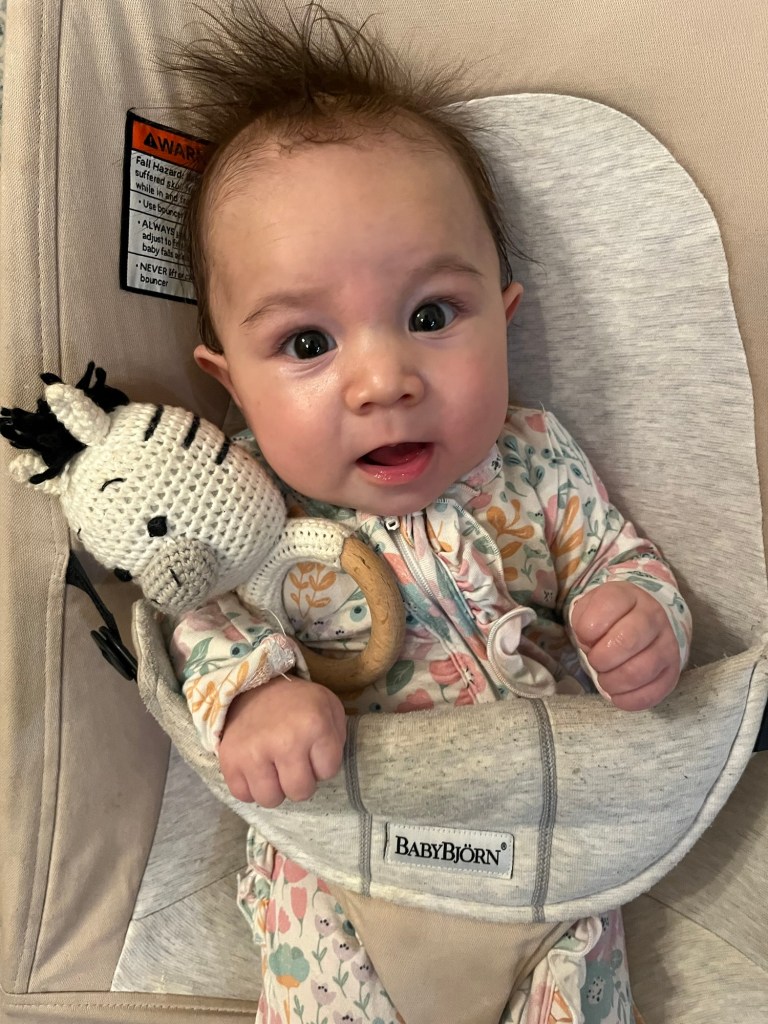
Happy Baekil, Woori. May you always be surrounded and loved by people who invest in you, because you’ve invested in them.
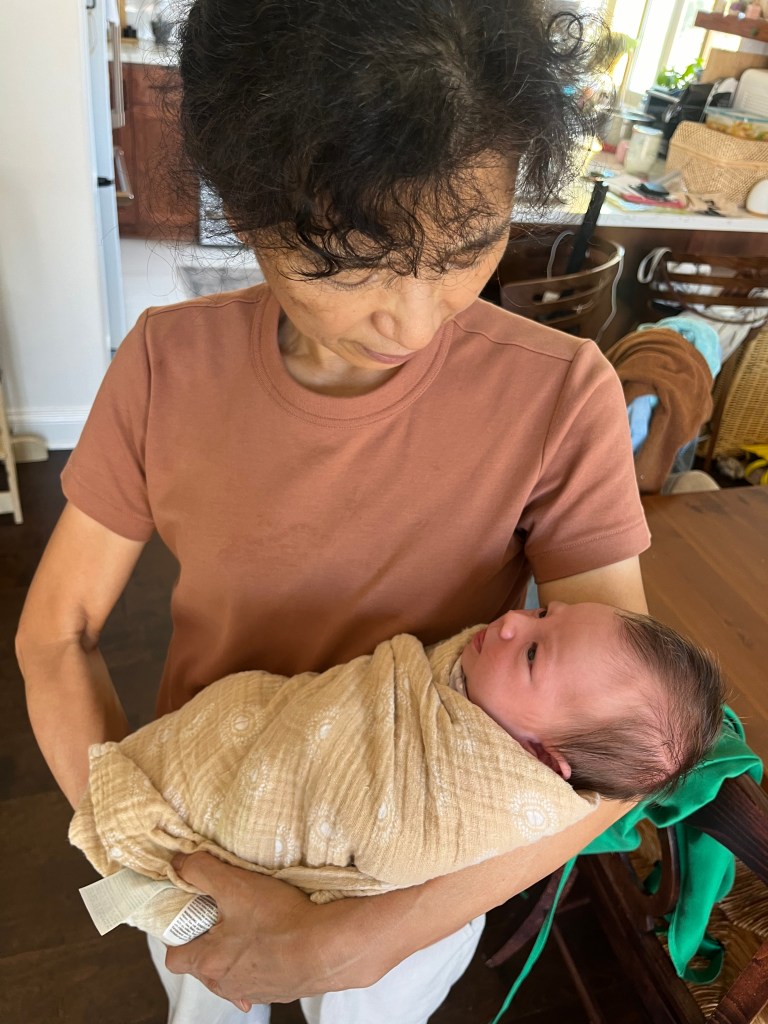
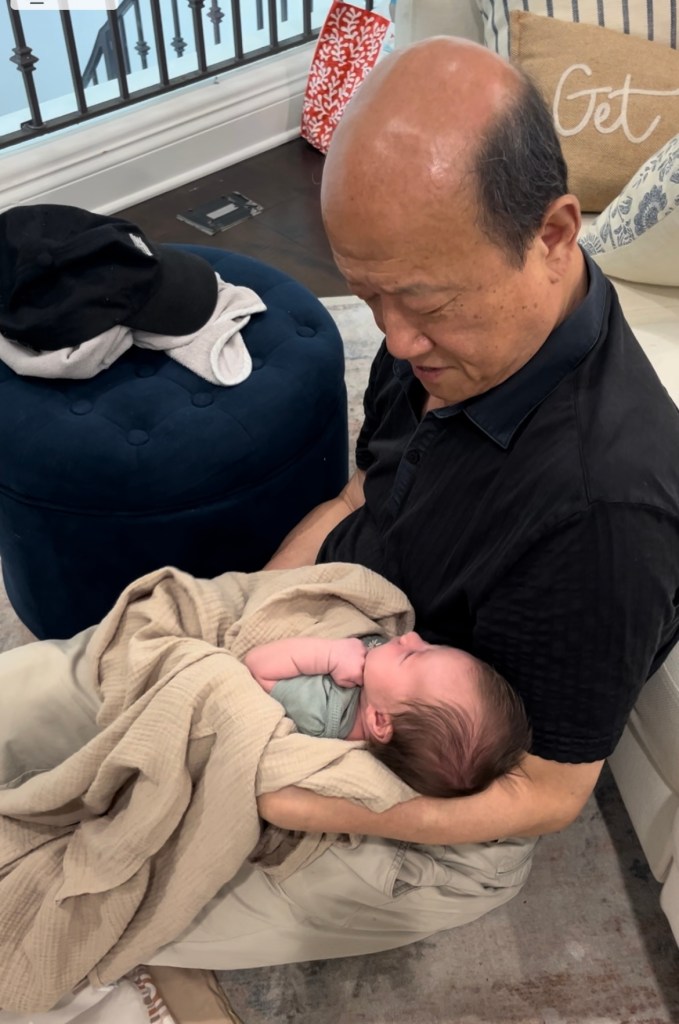
Our Woori, My Woori

Before we had Tov, before I even realized I wanted a child, I had a name for my firstborn.

I got the idea for Tov’s name while reading A Church Called Tov by Laura Barringer and Scot McKnight. I learned what the Hebrew word “Tov” meant then, and I fell in love with it, thinking, “If I had a child, I’d name him or her Tov.” And then I rolled my eyes– yeah, right, like I’d ever become a mother.

Just like Tov, I had a name for my secondborn before she was conceived.

At the time, I was working on a reported piece for Christianity Today about the modern-day challenges of finding community, and it quickly became more a personal essay because the piece was born out of my own frustrations and desire for community. In that essay, I was frank about my shortcomings and the mistakes I made that made community more challenging, and one thing became clear to me: I’m incredibly individualistic.

I’ve always been a very independent person; even as a kid I couldn’t wait to grow up, leave my parents’ house, and forge my own path. Since young, I’ve always been drawn to the western culture and celebration of individualism. It just felt right and natural to me, to emphasize self-autonomy, self-reliance, self-identity. I looked down on the Asian concept of collectivism, dismissing it as unenlightened, suffocating, and oppressive.

Over the last few years, as I study the Bible more and understand more about the nature of God, I’ve come to realize how some characteristics and consequences of individualism are actually unbiblical and toxic. God Himself is Three in One, and through perfect unity and community He created humankind, saying, “Let us make man in our image, after our likeness.” God didn’t call us into an individual relationship with Him; we are called into the Body of Christ to worship and fellowship together in community.

When Jesus Christ came to earth in flesh, he dwelt in a collectivist society, and one of the first things he did when his ministry started was to build a community. He then called us to build the Church– again, community. When he taught us to pray, he didn’t teach us to call out “My Father,” but “Our Father.”

The early churches met and broke bread together every day, sharing their possessions and wealth. The immediate work of the Pentecost was to break down the barriers between languages and cultures, and later creating unity between Gentiles and Jews under one Body and one Spirit. So much of the Spirit’s work is about reaching out to others, reconciling people, and loving people well. The fruits of the Spirit all have to do with our relationship with others.

If God Himself is communal, existing in community and encouraging community, then I need to change the way I think about myself in relation to others, and the change the way I view and participate in community.

That’s how I came to really appreciate the Korean word “woori” (우리), and how unique and pervasive it is in the Korean culture. In direct translation, woori means “we” or “our” or “us,” but the word contains a much deeper Korean concept of self and others. It evokes a sense of community, unity, oneness. Korean culture values community over the individual, expressed through the way Koreans frequently use “our” rather than “my.” That’s “our house,” for instance, or “our husband,” or “our school.”

I really took notice of the Korean concept of “woori” after Tov was born, when my parents would ask, “How’s woori Tov?” “Let us see woori Tov!” “Aigo, why is woori Tov so handsome? Must have grandpa’s eyes!”

Despite becoming so westernized in my thinking, I also realized how Korean I still am, when I felt a twinge after I heard my husband refer to Tov as “my son” rather than “our son.” I felt like I got cut off from the picture. On the other hand, even when David wasn’t around, I referred to Tov as “our son.” That just felt innately right to me.

That Korean use of “woori” might feel jarring for people from a more individualistic mindset. My friend, who just gave birth to a beautiful daughter, recently told me that she had to correct her mother when she cooed at her granddaughter, “There’s my J!” “No,” my friend told her mother firmly. “She’s not your J. She’s not your daughter. She’s my daughter. Mine.” I understood where my friend is coming from. She has a history with her mother, and she’s setting boundaries early. It’s what modern-day therapists and psychologists advise, too: Set boundaries with people for self-care and happy relationships. Only you get to decide what is acceptable and not, what’s your limit. Communicate that clearly to others, especially family, the source of your deepest triggers.

Meanwhile, the word “boundary” as used in this context doesn’t even exist in the Korean language. They literally have to use the English word “boundary.” Koreans might say “don’t cross the line,” but I believe that statement is a modern saying that didn’t become mainstream in Korean society until recently.

I actually think there’s something beautiful and right about my parents calling my children “woori.” It reminds me my children are not my own, that they’re part of a rich and long heritage, that they belong to not just a biological nuclear family but a more timeless, expansive family. I love my children dearly, but my and my husband’s love for them is not the only love that will shape, edify, and enrich them.

And that’s why, about a year ago, as I revised my thoughts on individualism, as I prayed for community, as I took notice of the obstacles I put up between me and a vibrant community, I thought, “If I have a second child, I think I’ll name him or her Woori.”

Several months later, I found out I was pregnant. And on August 19, 2024, I held our daughter in my arms and wrote on her birth certificate, “Woori Grace Lee-Herrmann.”

For all my philosophizing of Woori’s name, the practice of living it out is much harder and messier. I may recognize the good in my Korean heritage’s communal culture to the point of naming my daughter Woori, but there are still aspects of it that make me instinctively recoil and hesitate. Just like there are aspects of the individualistic society that are unbiblical and unhealthy, there are parts about the collectivist society that’s also unhealthy and twisted, and I still struggle to judge what is right and biblical, and what is not.

I am, by nature, still a very individualistic person. I live in an individualistic society steeped in individualistic culture. My Instagram feed is full of expert parenting advice on setting boundaries with your parents and in-laws, on how to raise kids with good self-esteem, a strong sense of self-identity, and a bold voice to express one’s rights and needs– all good things, great things. But some of those things are foreign to my very Korean parents, and we butt heads over our two very different cultural contexts.

If you have an Asian parent, you’ve probably gotten your fair load of unsolicited advice. My parents frequently tell me how to parent our children, which I oftentimes receive as passive-aggressive criticism.

“You have to make sure you wash his hands properly,” my mother would say after Tov developed strep throat, as though we let Tov roll around and sleep in dirt. When we FaceTimed during dinner, she would let out little shrieks as Tov dug into his pasta with his hands, sauce dribbling down his forearms. “Wipe his arms! Wash his hands!”

When she saw a photo of our nanny showing Tov a picture on her iPhone, she immediately texted to remind us not to give any screen time to our child.

When she saw how easily distracted Tov is, she hinted at the possibility of ADHD and exhorted me to train him to focus on one task at a time, even though he was still barely a toddler.

She compared Tov’s speech development with my niece’s, sent videos instructing me how to teach a delayed child to speak, and suggested I send him to a speech therapist.

She reminded me over and over again that a baby needs to sleep in complete silence and darkness. She complained about the loud washing machine downstairs, the loud noises outside, the loud work meetings in David’s office, and other auditory disruptions that will certainly stunt my children’s brain development, disregulate their emotional stability and perhaps that’s why Tov’s so delayed in speech and so unfocused?

Each time this happened, grenades popped off inside me. “Aish, Omma, just stop nagging!” I would snap at her, and my father would jump to her defense. “No parent nags less than we do!” he snapped back. “You don’t know how good you have it.” And then he preached about the Bible commanding us to honor our parents. “Let us live according to the Bible,” he said. “Blessed are those who let their parents nag.”

“Pretty sure that’s not in the Bible.”

“Oh, woe is our generation,” my father lamented. “We are the most pitiful generation ever. When we were young, we could not say a word back to our elders. We had to respect and tiptoe around them. Then we have children, and times have changed. Our children now disrespect us, and we have to tiptoe around our children. We served those above us and now we serve those below us, and nobody serves us!”

“So you want me to tiptoe around you, kowtowing and saying ‘yes, yes’ to everything you say?” I retorted back.

My father shook his head, as though shaking his head at the entire spoiled, entitled, and disrespectful generation to which I belong. “Truly, the end times are coming. Culture is changing too fast. So let’s just do as the Bible says. Honor your parents.”

“Honoring your parents doesn’t mean we just have to keep quiet when you’re vexing us,” I said, getting more and more heated. “The Bible also says, do not vex your children.”

Here’s the thing: I really, really like the concept behind “woori.” I really appreciate the values of community, unity, and sacrificing self for the common good. It’s so ideologically charming and pleasing, like the idea of sipping tea in an old English cottage with a thatched roof– until you realize those quaint, pretty roofs can be annoying to maintain, vulnerable to fungal attacks, fire, and bug infestation.

I like my parents calling my children “woori” until the actual practices of it grate against all my individualistic impulses and preferences. I don’t like people telling me what to do, even if it comes in the form of harmless advice and suggestions that I can always choose not to follow. I love it community when my parents help watch Tov so David and I can go on a date, or when they say nice things about them, but I get triggered when my mother worries over Tov or Woori, or mutters the mildest hint of criticism, and I get even more triggered when my father starts preaching at me with Bible verses. I like the “woori” concept only when it benefits me and requires little effort or sacrifice from me: You can love my kids, but from a distance, saying only positive things, and God forbid you care enough to suggest what you think might be best for them. That’s the opposite of what “woori” is.

I don’t intend to obey everything my parents say. I’m an adult, and they raised me to be independent and mature, capable of making my own decisions. But at the very least, I can listen to their unsolicited advice and their preaching without getting snappish, even if they annoy me, and be genuinely thankful that someone else cares so much about my children to worry and nag about the details of their upbringing, things that most people don’t even bother thinking about because our children are not “woori” children.

Woori’s name was a gift from me to her– a prayer, a blessing, and a benediction that she would never lack community, that she will seek and find and form a community wherever she goes, breaking and sharing bread with all kinds of family.

But Woori’s name is also a prayer and a blessing for me, too, as Tov’s name has been for me. Both our children’s names embody an important, essential characteristic of God. In my pursuit to know God more, to meet him the way Moses did– speaking to him face to face, “as a man speaks to his friend” (Exodus 33:11)– I see the image of God in my own children, even as they reflect my image: Woori Tov, and woori Woori.