
-
How I feel 4 months postpartum as a stay-at-home mother

It’s been almost four months since I’ve had Woori.
Many people, after reading my essay for Christianity Today on transitioning from a working mother to a stay-at-home mother, have asked me how I’m doing now that I’ve crossed that transition.
I reply, “Don’t know. Ask me in a few more months.”
It’s a hard question to answer because honestly, I’m rarely thinking about how I feel. I’m just clucking about like a crazy hen, pecking at this, chasing chicks, fluttering and puttering and scuttling. My eyes only see what’s right before me in the dirt, at hen-height. The day passes by so fast I can barely tell a Wednesday from a Saturday. I could have sworn I just folded a pile of laundry, and behold, here’s a mountain of laundry waiting to be folded again!
So I haven’t really had the chance to sit down and process my thoughts and feelings, but it really isn’t just about lack of time, either.
I’ve gotten dumb. I’ve gotten really, really dumb. When I expelled all my postpartum blood, I seem to also have flushed out most of my IQ. I forget friends’ names. I forget to respond to texts. I forget where I placed an item right after I’ve placed it. I lose my phone all the time. I can’t finish a thought. Words don’t come to me as I’m speaking, so my sentences are jumbled and chopped. When David wants to talk to me about news and politics, I have absolutely no mental or emotional capacity to respond other than to mutter, “Oh yeah?”
So yeah. How do I feel about being a stay-at-home mother? Maybe the most accurate description is: Dumb AF.
But it’s also confusing. Because in those moments when I am more aware of my thoughts and feelings, they don’t make coherent sense.
At times, as I hold Woori and feel her warm little head resting on my shoulder, or kiss Tov as he giggles with such wild joy, I feel such deep contentment, like my life is perfect the way it is. And then other times, I’m deeply discontent, and the smallest thing annoys me— the permanent clutter, the hands constantly grabbing at me, the noises, the very breathing of my husband. (Is it too much to ask our spouses to stop breathing for just half an hour?)
At times, I’m simply so filled with gratitude for the blessings God has given me that tears spring to my eyes, and I want to leap and sing like Maria in Sound of Music. Other times, I’m in inexplicable rage mode, wanting to kick walls, throw things, scream.
At times, I love the familiar, comforting drudgery of motherhood— feel relieved, even, that I don’t have to go back to work. Other times, I feel pinches of panic and anxiety— is this it? Am I stuck in this merry-go-round of domestic hell? Dropping kids off, picking them up, cooking and cleaning, wiping butts and wringing your explodes mustard-colored poop off onesies? What if I never make something of myself? Am I ever going to write a book?
At times, I tear up seeing how big Tov is now, and how quickly Woori is growing, and whisper to them, “Oh, stop growing so fast,” and I wish I can freeze time and capture them tiny forever in a snow globe. Other times, I’m impatient for the next stage, impatient for them to be more independent and self-sufficient, so I don’t have to help dress them or bathe them and I can have my life back again.
That’s the paradox of parenthood: I feel the extremes of both ends on the emotional spectrum, often within the same day. I’m standing pulled and stretched in that tension of contradictory feelings, which spike and dip wildly like a monsoon season. And from what I’m hearing from other parents, everything I’m feeling is normal. Laughing with joy one minute and then internally screaming with frustration the next? Quite normal. Wait till your kids are teenagers, they say.
So. At four months postpartum, how do I feel? Like a mother, I suppose.
-
Woori’s Baekil (100th day)

This sweet little girl is 100 days old.
To be accurate, she is 106 days old now as I write this. She is a healthy baby, not very chunky but sprightly and smiley and oh so snuggly.
Only 106 days old, and I can’t imagine a world in which she didn’t exist. I was hugging her the other day, smelling the sweet powdery scent of her little head, and thinking how crazy it is that she’s only existed for three months, how still so new and fresh she is as a life on earth.
Baekil (100 day) is a big event in Korean culture because so many babies back then didn’t live past 100 days. 100 days is a milestone that the babe made it this far. To mark the event, Koreans traditionally made white rice cakes, because “baek” is also pronounced the same as the Korean word for “white.”
For Tov’s baekil, I baked a white cake, cooked noodles (white and also a symbol for longevity) and dumplings, and bought white rice cakes from the Korean market. We kept it really low-key— no decorations, no hanbok, no guests except for a couple church friends.
For Woori’s baekil, I did the same: white cake, noodles, dumplings, rice cakes, and church friends.
Guess who didn’t appreciate it in the least.
Woori. She didn’t give a crap whether it’s her 100th or her one millionth day; she was yowling in indignation that she would be so cruelly neglected while I hurried and bustled around trying to shop and get things ready. It was Thanksgiving the next day, so I was prepping for the next day as well. It was a busy, hectic, flustering day, despite me trying to keep Woori’s baekil as minimally fussy as possible.
On the agenda for that day:
- Prep the maple bacon cinnamon rolls for Thanksgiving, so that it’s ready to be baked in the morning.
- Talk to the Ferguson rep to finalize orders for all the bathroom and kitchen plumbing things for our new house.
- Thaw and cook pork butt in instant pot for dinner.
- Run to Korean mart to pick up ingredients and rice cakes.
- Make frosting and frost the three-tier Greek yogurt white cake.
- Chop veggies, boil noodles, make sauce, and fry dumplings for dinner.
- Wipe down every surface because one of our guests is severely allergic to everything we eat on a daily basis: dairy and nuts.
It doesn’t seem like a lot, but add to that needing to feed Woori every 2 hours or so, and Tov being home because school is off for the week, and the day turned out to be quite frantic. Usually just one grocery trip is a big enough task for the day for me.
I’m always, always shocked by how little time I actually have…and how much time it actually takes to get one thing done.
It didn’t help that I burned the bacon for the maple bacon cinnamon rolls, which meant I had to stop by Vons for more bacon. I burned it because the call to finalize plumbing orders took over an hour, much longer than I expected.
While Tov was napping, Woori and I rushed to the Korean mart, then stopped by Vons to get bacon. By then Woori was hungry and screaming in the car.
“I’m so sorry, Woori, wait just a little while longer,” I said, while silently cursing all the cars on the road that was causing unnecessary traffic.
She screamed, I cursed, she screamed some more. The traffic inched along, chocking with harried people who were probably doing last-minute shopping like I was.
I was so tempted to just forget the stupid bacon, but then it wouldn’t be maple bacon cinnamon rolls, would it? And whose genius idea was it to make freaking maple bacon cinnamon rolls? Why couldn’t I have just made it easy for myself and bought a freaking pumpkin pie from the store?
“I always do this to myself,” I yelled in the car. “Why? WHY?!”
Got the bacon. Rushed home. Found that Tov had already woken up from his nap and was crying in his crib. Fed Woori while Tov begged to play with me, pulling on my arm. We compromised by him bringing a book to me so I can read it while nursing Woori.
Then as I was making the frosting for the cake, of course Tov wanted to participate too. He screamed because there is no flour needed for the frosting, and he loves measuring and dumping out the flour. And then he insisted on helping me frost the cake, though he lacks the proper skills. I let him muck around for a bit, and then had to hurry things along because I hadn’t all day.
“Here, let umma do it.”
He whined, gripping on to the icing spatula with a death grip.
“Come on, let me do it!”
I grabbed the spatula, now all sticky and gross from his frosted fingers, and we played tug of war for a good few minutes.
“No, no. Drop it. It’s umma’s turn.”
“Aaaaah nooooooooooo!!”
“Give that to me!”
He tilted his head back and howled like a wolf that’s been kicked in the gut, big fat tears rolling down his cheeks and soaking his t-shirt: “Waaaaaaaah!!”
Meanwhile, Woori was starting to fuss on her bouncer, either getting hungry or restless or tired or all of the above. Her grunts escalated into howls as well.
Tov mercifully stopped howling then, as though surprised that someone else is as anguished as he is. “Bebe crying,” he told me.
“Yes, you’re both crying, and you’re driving me nuts,” I said.
And then— “Ah, shit.” I didn’t make enough frosting. I quickly turned on the Kitchenaid mixer again, tossed in the vegan butter and sugar. Whip whip whip.
I finished frosting the cake at record speed after another wrestle match with Tov and then let Tov lick some leftover frosting from the Kitchenaid paddle. Whatever it takes to keep him quiet.
OK. What now? Oh yes. Candy the bacon— no burning it this time! Roll out the dough I had prepared in the morning. Slather the butter and cinnamon sugar. Crumble candied bacon on top. Roll roll roll. Cut cut cut. Clear the fridge so I can make room for the cake and the rolls.
I get a text from my church friends saying they’re on our way. Yikes, gotta speed things up!
Chop chop chop vegetables. Let Tov make a mess next to me on the countertop to keep him occupied. Stick out a foot to rock Woori’s bouncer whenever she starts fussing. Grate grate grate the vegetables. Pull the pork. Whip the sauce. Boil somen noodles. Fry the bulgogi dumplings. Wipe the tables and other surface areas.
By the time my church friends arrive, my hair is in disarray, my clothes are marked with frosting and soy sauce, and I still have groceries from the Korean mart sitting in their bags on the dining table.
But at least the cake is frosted, the pork is tender, the noodles are sauced, the dumplings are crispy, the vegetables are cooked, and the rice cakes are sitting on a wooden cake plate.

All in celebration of Woori. None of which Woori can eat.
I don’t know why we do this. Make busyness for ourselves. To put so much significance into certain things. Celebrating baekils doesn’t really make sense anymore in today’s modern world, when the vast majority of babies survive infancy. But we still do it, because, I suppose, it’s an excuse to gather. It’s a heralding of a life that’s worth that fuss, even if that person doesn’t know how to appreciate it yet.
We all squeezed into our dining table and ate the food while Woori sat on her bouncer staring up at us, unable to even taste a single bite.
The irony of it tickled me: She had been lugged here and there when she wanted to nap, bounced vigorously when she wanted attention, smacked in the face by her over-affectionate, over-enthusiastic brother, sitting in a poopy diaper for who knows how long because her umma forgot to check her diaper, fed inconsistently because her umma was busy scraping dough and speed-chopping shiitake mushrooms. All because we wanted to celebrate the fact that she’s still alive.
She may not appreciate it now, but she’ll come to see this moment as an investment in her. The church friends we invited are a family of four (soon five) with two toddlers aged 3 and 1. They came risking their older son’s allergy flareups, knowing our house is full of potential allergens, medication ready in case he breaks out in hives (he did, sadly— despite my best efforts). They left their house almost an hour early and arrived at our house just in time— which means they spent an hour in traffic. They gave us a good chunk of time despite their kids’ bedtimes. They were investing in us as a family.
I didn’t need to do anything for Woori’s baekil. But I did something because it’s one opportunity to build that community David and I have been praying about, the community Woori is named after. I didn’t care for a huge elaborate party. For Woori’s baekil, I just wanted one family to show up and be present, because Woori matters to them, because we matter, because any reason to gather as a community is worth it.
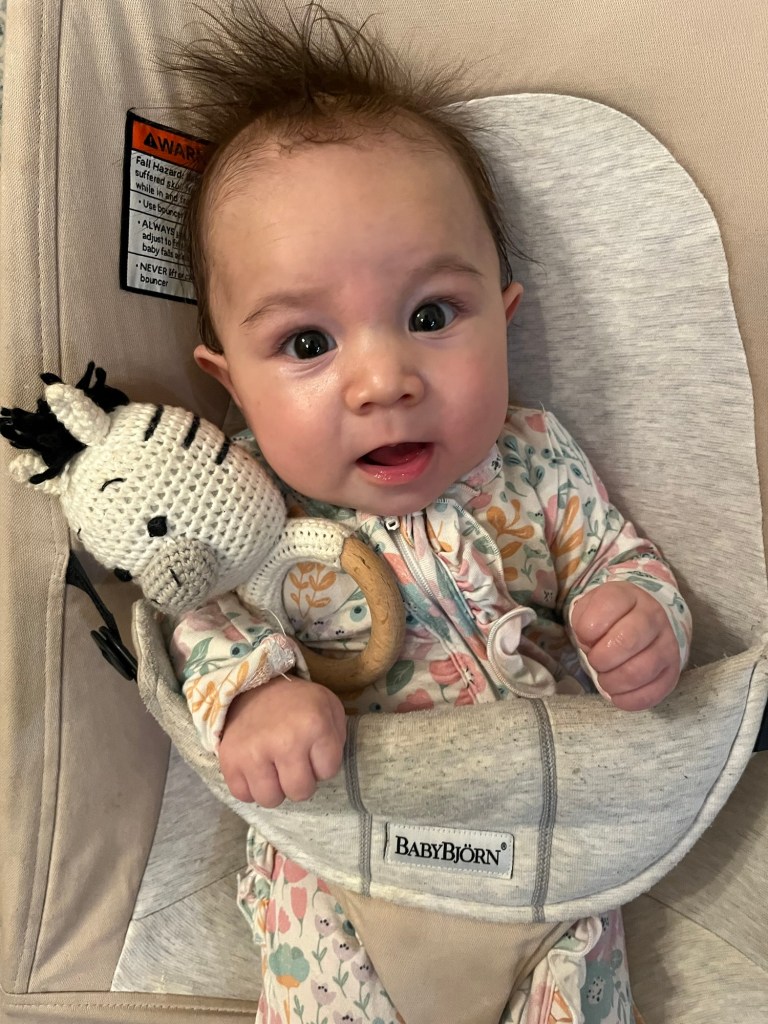
Happy Baekil, Woori. May you always be surrounded and loved by people who invest in you, because you’ve invested in them.
-
How I get everything done with 2 kids 2 and under

Ha. Made you look.
I lied. I don’t get everything done. It takes two days for me to fold laundry. I have a package by the front door that’s been sitting there unopened for six days, and counting. I need to review a 5,000-word article my editor sent me, but I keep forgetting because I have no time during the day and by nighttime, all my brain has room for are murder novels and cookies.
Also my toddler is in school most days of the week, so for a good chunk of the day, it’s really just me and a 3-month-old.
But really. If you saw my IG stories of me baking bread and making pizza from scratch, it might seem like I’m a productive mother of two, an Asian Ballerina Farm, except way less attractive and graceful.
I watch YouTube while I work out. It’s good background noise for me. I work out as much as I can when Woori naps in the bassinet, which can range from 10 to 45 minutes, though most days it’s about 25 minutes. Because as a new mother I used to search for YouTube videos on what baby products to buy, YouTube’s algorithm now targets me with all these mommy influencers, and pretty much all of them seem to have at least several videos with similar titles as this blog post: “My productive morning with 5 kids.” “Making a week’s meals from scratch with 4 kids.” “How I get everything done with three kids 3 and under!” “Getting things done as a busy homeschooling mom of 7 kids!” Somehow they are all super fertile and love homeschooling.
There are influencers whose sole content is to parade their gaggle of children while they can apple butter, plant their own organic herbs, and make loads of money marketing electrolyte supplements on YouTube, all the while homeschooling their kids, breastfeeding their newborns, decorating their house with vintage finds, and sharing a chaste kiss with their husband in the kitchen.
I hate them. I love them. And I watch them and their lives, wondering how they can make sourdough blueberry bagels each week (I’ve tried making those bagels— they take soooo much time!) and homeschool their gazillion kids and create content and put on mascara every day and keep their cool while their toddlers grab at their apron strings whining and demanding (which must happen off-camera, because I’ve never heard a single whine from their children).
I know how social media works. I know that much of these content is performance and entertainment. These types of videos generate clicks and follows and income, because for people like me at least, it’s content that seem inspiring, even if it’s inspirational only as far as sparking the intent to be half as productive. In reality, these content, at least for me, is at best mindless entertainment and at worst a cesspool of jealousy and resentment.
That said, I do bake a lot. I bake because Woori won’t nap for long unless I’m holding her. But I can’t just hold her in a comfy chair; I gotta hold her and jiggle and walk around, further aggravating my degenerative disc disease. So rather than just walk around holding her while staring into space, I wear her in a wrap and bake and aggravate my degenerative disc disease.
I’ve baked sourdough whole wheat bread and Japanese milk bread and peanut butter oatmeal cookies and sourdough cornbread and sourdough Irish soda bread and sourdough pizza and coconut granola and sourdough brownies and sourdough blueberry bagels.
Yes, I bake a freaking lot. Partly because we love to eat those things, and David gets sad if there’s no homebaked cookie for his midday dessert. But mostly because I like feeling productive. I like the satisfaction of holding tangible edibles that I’ve made with my own hands, even if my son won’t eat them because he’s a punk who only eats cancer-laden treats that come out of plastic packages.
I am addicted to feeling productive. It makes me feel good. It makes me feel like I amount to something, like I’m not wasting my life.
But of course, it’s just a feeling. A temporary painkiller pill that prolongs my addiction to feeling productive but ultimately still wondering, in moments of clarity, what I’m really living for, where my time has gone.
I’m a womb Christian and a PK who has had the answer drilled into my brain for decades: I live for the glory of God! I live to know and become more like Christ each day! Because He lives, I can face tomorrow! Spirit lead me where my trust is without borders, let me walk upon the waters, wherever you would call me…so on and so on.
But on the micro level, my heart doesn’t reflect that. In those moments when I start thinking about where my life is and where it’s going, I feel stabs of panic: What am I doing? What have I accomplished?
Not too long ago my former editor called about something, and in that conversation, he asked me, “Where do you see your career going in the next few years?”
And I told him, “Oh, my career is a deep, dark hole right now.” I chuckled as I said this, but the truth of that statement struck anxiety in me. Is this the end of my career?
Before I had Woori, I made a list of things I want to do once I quit working and become a stay-at-home mother. That list is laughable now for its optimism. It included blogging once a week, journaling daily, going to the farmer’s market, going to the museum, doing art, working on a novel.
I haven’t cracked open my journal or sketchbook at all, I’ve still not been to the farmer’s market, nor gone to the museum, nor even started the brainstorming process for a novel. The only thing I did check off the list is baking.
And whenever I think of that list, most of it geared towards productivity and keeping my intellect stimulated and setting pathways to a future career, I feel discouraged.
Jeez, relax, I tell myself. Woori’s only three months old. You’re only three months postpartum! Give yourself a break! But I also know that as Woori gets older and begins crawling, it’s going to be harder for me to do any of those things on my list. Realistically, I won’t be able to get serious about my career until my kids are in school, and even then, that all depends on their extracurricular activities and my own energy. What if my writing gets stale by then? What if I’ve fallen so far off the scene that nobody wants to hire me? What if I sink so deeply into the daily grind of parenting and homemaking that I don’t realize how much time has passed until the kids are out of the house and I’m in retirement age?
Those are the questions that prick at me when I sit and think about my future. Perhaps mothers who are way ahead of me in life stage, who have older kids and have restarted their careers, will think I’m being silly or myopic. But at 37, with two kids 2 and under, and perhaps, hopefully, a third baby one day, the shelf life of my career feels very limited right now.
Maybe that’s why I watch those mommy influencers. Because they literally make parenthood and homemaking their career. They do all the tedious chores that we all do but can call it content. Changing diapers and making one-pot meals are accomplishments, because they literally make money off it. They have numbers they can track to feel accomplished and successful: 10,000 followers, 100,000 followers, 1 million followers. They know they’ve made it when they score partnerships with big brands, receive mountains of free products.
I don’t ever want to be an influencer, but I’m envious of them, envious of the clarity in their work, trackable by the income they bring, measurable by the business they’ve built. Envious…that they can seemingly do it all.
That’s why I was surprised when some people who saw my IG stories of my baked goods and homecooked meals told me they’re amazed at how much I get done. That was never the image I was trying to convey when I post what I thought were just fun random shots on social media. I cut down on posting those things because I didn’t want to create an illusion of myself, or make people feel the way I do watching YouTube mommy influencers.
The reality is, I often feel unproductive and unaccomplished, and have had to significantly cut down on my standards for what I can get done in a day. Just going to Costco is a big deal. Getting the laundry folded and tucked away in closets is worthy of self-applause.
And as much as I daily marvel at what I have— a good husband, beautiful healthy children, a warm house, and the privilege to buy 15-pound sacks of flour— sometimes, I despair at the fact that such small tasks as doing laundry have become my biggest accomplishment of the day. That my standards have dropped so drastically, but even more honestly and embarrassingly, that nobody cares about that except me. I have faded silently like mist into the shadows of full-time motherhood, and nobody is thinking, “Something’s missing. Where are Sophia Lee’s articles! God I need her writing!”
And therein says a lot about the condition of my heart— why on the macro level, I know what truly matters in life; I trust that God is sovereign and all things work together for the good of those who love Him and are called according to His purpose; I know that I’m called to be faithful and grateful in this season I’m in. And yet in the minutes of my day, I’m disappointed and insecure, and I wonder, “But is that it? What’s next? Surely this is not enough.”
How do I get everything done with two kids 2 and under? I don’t. I’ve seen so many videos with such titles and I still don’t know how they “do it all.”
And I think that’s the point. These videos are created because there’s a demand for it. Because most parents like me are struggling to get even one thing done, and in this modern day, productivity is an idol, a status, a social class, and when we watch these videos of beautiful, well-dressed women maintaining an organic garden, a tastefully decorated home, and an armful of well-behaved children, they become our aspiration. No longer am I proud of getting the laundry done; the bar has been raised, the standard for adequacy set higher.
I remember studying Nehemiah years ago. In chapter 3 of Nehemiah, there’s a long list of names that people typically just skip over. I do, at least. It’s just name after name after name of people who are mentioned once and never again in the Bible.
But still— their names are in the Bible, read (and glazed over) by millions of believers over centuries and centuries. It is a huge freaking deal. And for what? For helping repair a wall. For scavenging rocks and stamping mud bricks and installing bolts and bars by an entrance called the Dung Gate. For doing menial tasks and manual labor, they got their names inscribed for eternity into God’s Word. Why? They were faithful to the task God called them to do, as lowly and humble as it is.
The world has their standards of accomplishment, and God has His. I suppose this is also what Jesus meant when he said, “my yoke is easy, and my burden is light.” God’s call for me isn’t to be a bestselling author, or a world-traveling journalist, or a supermommy. His standard for me is simply to be faithful to the task He’s laid in front of me today. And for now, it’s being a wife and a mother of two young kids.
I think back to my career as a journalist, and it’s humbling to remember how the amazing jobs I’ve had simply opened up to me, seemingly by chance. I had never heard of World Magazine until I started working for it. It wasn’t the job I had wanted, but it turned out to be the right one for me, and I had some terrific years there. And after I resigned, not having any jobs lined up, the CEO of Christianity Today called me to offer me a dream job, everything I’ve wished and prayed for. I didn’t go looking for those jobs— they came to me.
That’s a great track record of how God provided for me in those 11 years of my brief but fulfilling career. He’s been so faithful to me. So why wouldn’t He continue to be faithful? If He opened those doors for me, He can do so again five or ten years down the road.
And if my career has really ended for good, that’s OK. It means God has other tasks for me in mind, and they might seem lowly and mundane, invisible and unacknowledged to the eyes of others, but God sees.
He saw Shallum son of Hallohesh and his daughters as they repaired the wall by the Tower of the Ovens. He saw Malchijah the goldsmith, and Pedaiah son of Parosh. Which means He also sees Sophia Lee, wife of David, mother of Tov and Woori, as she tries to finish folding laundry while Tov literally climbs over her and Woori wails and wails on her bouncer, and at the end of the day, He celebrates with her that she somehow survived yet another day.
-
Woori’s first smile

There are many precious “first” moments in parenthood. Even though this is my second child, every “firsts” still feels as novel and precious and magical as my firstborn’s. And for me, the most precious “first” is that moment when the baby looks you in the eye for the first time and cracks her first smile.
Woori gave me her first smile when she was about 10 weeks old. It was such a surprising gift for me, because Tov didn’t smile until he turned four months.
But there she was, looking up at me, her round eyes folding like origami into crescent moons, her cheeks rounding, her toothless mouth curving into a soft laughter. I had been busy in my mind, as I always am, but when she smiled, every other thought flew out of my brain to allow space to wonder at this most beautiful, uniquely human expression: the genuine smile.
Babies look so serious most of the time. They yawn so seriously. They stare so seriously. They burp so seriously. And occasionally they look at you with an expression of disgust or confusion, like, where the heck am I? Who the heck are you?
But that’s what makes their first smile so astonishing and amazing. It’s the first sign that they recognize a human face. That they know how to peer into human eyes, your reflection glinting in their pupils, and meet you, soul to soul. Instinctively, guilelessly, they sense someone made in the same image as they, and they greet you with a smile of recognition, of delight. I think it might be the same sort of smile Adam gave Eve when God first brought her to him: What! Hello there! You’re like me! But not me. Who are you? I can’t wait to get to know you.
There is so much beauty and power in the life of a human being. Scripture says all creation— the sun and moon, the shining stars, the hills and seas, the wild animals and small creatures and flying birds— all worship and give praise to the glory of God.
But no creation reveal as much glory of God as the one and only being created in His image: Humankind.
You don’t have to be a parent to know this truth deeply. You don’t need to be a Christian to love humanity and see its goodness— in fact, some non-Christians do it better than professing Christians like me. But for me, because I can get so irritable and cranky and cynical, I need to experience being a parent of a newborn to remind myself of that truth, to witness that first smile, presented like a gift personally and only for me, and gasp. To gaze into this little human being’s eyes, so clear and innocent, and see God’s original creation, God’s own image. To tear up, because it’s just so dang beautiful there is no words to describe it except to weep helplessly at the magnificence of human life.
I write this the day after Election Day. I woke up to the official confirmation of Trump as our next president, but I went to bed already knowing he won. I thought I had been pretty apathetic about politics and the election, but I suppose I still have a lot of emotions buried inside me, easily triggered from memories of 2016 and 2020, from all the toxic news and social media content, the online and real-life comments I’ve read and heard for the past eight years.
So this morning, with images of Trump lifting his fist in triumph, those emotions frothed out.
“WTF is wrong with our country?” I texted my friends.
And by this I mean WTF is wrong with those people? And that one sentence exposes all the stereotypes, the tropes, the contempt and disgust and rage I have for people who think differently from me. They are flattened to images— images of my neighbors who hung “Get Back America!” flags on their balconies and front yard, neighbors who drove obnoxious, mega-loud pick-up trucks that fluttered humongous USA and Trump 2024 flags as they roared down the streets in a cloud of diesel fumes.
I was frustrated and exasperated and enraged, in part because I had no control at all. We were given two terrible candidates, neither of whom intrigued or excited me. I didn’t vote for either of them. My personal conscience didn’t allow me. And so, in that helplessness and lack of control, I felt nihilistic.
America will reap what she sow, I thought. Let her crash and burn for all she deserves. In that moment, I wanted people to hurt, to be disappointed, to despair, all so I can satisfy some weird, short-lived self-righteousness and masochism. I actually wanted to revel in the destruction of humanity.
And then it was time to feed Woori again, and as I nestled her on my lap, she gazed up at me and gave me a big, happy smile, even letting out a little squeal, so excited was she to meet eyes with me.
I smiled back. I laughed. She smiled even more and cooed back. She doesn’t speak words but we were communicating, on the most basic level, a most basic human expression: Hello! I see you.
Ah yes. I see you, image-bearer of God. I see you. And I see them. Thanks for the reminder. Thanks for opening my eyes again.
-
How we spend our Saturday with a toddler and a newborn

It is a well-known fact among working parents of young kids that weekends are now your work days. Your kids are not in daycare or school. In fact, your children have this innate ability to sense when it’s the weekend, because once Saturday morning rolls in, they somehow instinctively wake up before the sun even peeks out.
One day, when my children are much older and I have to shove them out of bed to wake them up, I might forget what these weekends are like, so I decided to record a typical Saturday for us with a 2-year-old and a newborn.
5 am: I hear Woori stirring. I climb out of bed shivering. My postpartum night sweats have been cooling down, but I still wake up with my hair and clothes kind of damp, and because we sleep with the windows open, it’s freezing.
I change into a dry T-shirt then stumble to the kitchen to grab my pump and warm up a bottle of refrigerated breastmilk. I bottlefeed Woori while I pump, nodding off to the sounds of her sucking.
5:30 am: I finish pumping. I throw the bottle and pump parts into the kitchen sink. Too sleepy to wash them. I swaddle Woori and place her back into her bassinet. Climb back into bed. She’s a little fussy still but I pass out and eventually, so does she.
6:30 am: Tov’s up! David gets up and turns on the TV for Tov. Saturday mornings, we allow Tov some screen time. He’s currently obsessed with a YouTube channel in which some brilliant guy’s making tens of thousands of bucks by creating videos of trucks and police toy cars driving around and getting into glorious accidents.
“Oh no!” Tov yells at the screen every time a truck crashes.
7 am: David heads downstairs to the gym to work out. Tov gets bored of his show so gallops over to my bed and starts making enough ruckus to awaken both Woori and me.
Welp, time to get up.
7:30 am: I make a matcha latte and try to nurse Woori while Tov literally climbs all over me. He grabs my hand and tries to drag me to his room, but I’m still feeding Woori. He begins whining.
Then he suddenly remembers he has a little sister and grins at her. “Aaaaaay!” He says, rubbing his hand all over her face while she’s trying to feed. Poor Woori. She tolerates a lot from her big brother.
I try to listen to a devotional podcast called The Daily Liturgy (my favorite) while nursing, but with Tov yelling and running all over the place and grabbing at me, I am so distracted that I have to rewind over and over. I also fall asleep while breastfeeding despite all the noises Tov’s making. As soon as the podcast is over, I forget everything except “His steadfast love endures forever.” Or something like that. Amen.
8:30 am: I try to eat breakfast. It almost always includes three soft-boiled eggs. The problem is Tov loves cracking and peeling eggs. As I’m peeling the eggs, he scampers over and asks for an egg to peel, too.
I give him an egg. He screams and cries. He wants a different egg. Fine. I give him another egg. He seems content with that one. He peels it but doesn’t eat it. It rolls on the floor, coating itself with dirt and crumbs.
Usually Tov doesn’t eat breakfast, so we stopped offering it to him unless he asks for something. But today he seems hungry, because he ate most of my eggs.
9 am: I try to give Woori some tummy time. She screams. I try to give her some face time, attempting to get her to smile. She shoots me an expression of pure disgust. Babies are delightful.
9:30 am: David trots up sweaty from his workout. It’s my turn to work out now. This is Mr favorite part about weekends now— I can leave Woori with David and get a full workout, instead of cutting it short because Woori decided to take a 15-minute nap, which is almost every day.
10 am: Welp, never mind. Woori is screaming her head off and David can’t get her to settle down because his man boobs are useless, so I cut my workout short and rush up to nurse her again. I’m kind of resentful that my husband got a 90-minute workout while I got barely 30 minutes.
11:30 am: Shower. Woori is perky and content now so she lies without fussing on her changing pad on the floor while I rinse off and do my morning skincare routine.
12:30 pm: I don’t know where the time has gone. We are dashing about preparing snacks, changing diapers and pull-ups, getting ready to leave.
We have a special treat for Tov today. We are going to Irvine Park Railroad! It’s a kids amusement park that offers train rides and paddle boats. I saw it on Instagram and we knew Tov would love it.
Problem is, Tov doesn’t know that we have a whole wonderful afternoon planned for him. We have to physically wrestle him to get him ready.
While David puts Woori into her car seat, I’m trying to cajole Tov to go down the stairs with me while I struggle with two heavy bags filled with essentials for baby and toddler. He wants me to carry him. I hoist him up on my other shoulder and say a little prayer for protection for my bad back. I have a feeling it’s only a matter of time before I hurt my back again.
1 pm: We somehow managed to all pile into the car. Both kids are strapped into their car seats. Tov has snacks. Woori is throwing a fit. She’s tired and hates the car seat.
We start driving east towards Irvine while Woori shrieks and yowls her displeasure. And then Tov starts screaming as well because he spotted David drinking a can of Waterloo sparkling peach drink and he wants it too.
The GPS says it’ll take us 2 hours to reach Irvine Park Railroad. Thankfully, Woori eventually tires herself out and pass out. Tov passes out too. So do I.
2:30 pm: We are getting close to the railroad park, only to discover that every entrance into the park has a half-mile-long line of vehicles waiting to get in. GPS says it’ll take us 40 minutes just to move 0.8 miles. WTF.
Turns out, it’s pumpkin patch season. We chose the worst possible time to come here. We jettison our plan and scramble for Plan B. We decide to turn around and go to Heritage Park in Irvine instead.
3 pm: I find a public library in which I can nurse Woori, while David takes Tov for a romp around the park. Pretty much every single person I see in that park is Asian. If I see a white person, 10/10 they are married to an Asian.
David and Tov find a water play fountain by the lake. Tov gets soaked. He is the only one splashing. The other kids are apparently not allowed to get wet. They eye Tov from their safe dry spot with envy.

We change Tov into dry clothes and look at the clock. 4 pm and more than an hour away from home. What the heck is there to do in Irvine?
4:30 pm: We head to Spectrum Center, a massive outdoor shopping center. Maybe we can get some coffee and a nice dinner? So exciting. Things we could have done at home without the waste of time and gas money.
Spectrum Center is packed as well. Lots of young couples and families. But Tov is the only child insisting on dunking half his body into every fountain in that center. And there are a lot of fountains. They’re beckoning to Tov from every corner. How can he resist? How can he not run screaming “Wawa!!!” to every fountain and dip his forearm into the pool?
When he’s not chasing fountains, he’s insisting on pushing Woori’s stroller, getting upset when we try to steer him away from people, bushes, and poles. When we finally snatch the stroller away from him, he flings himself onto the floor, prostrating like a professional mourner and wails. Fat globes of tears roll down his cheeks.
After 40 minutes of this, we’ve finally had it. Forget dinner! We are returning home!
5:15 pm: But first, coffee. We stop by the Citibank Cafe since David gets a discount with his credit card. He gets a coffee, I get a matcha latte. Tov points at a sugar-crusted almond croissant. He orders, “This!”
I order him a zero-sugar protein strawberry yogurt instead. He polishes it off.
My stomach growls. I realize I haven’t had time for lunch and Tov had eaten most of my breakfast.
We sit down for 5 minutes at the cafe but Tov, high on yogurt, hops and skips and yoddles and climbs all around as though the cafe is his personal play gym. I see a young Asian couple give him the stink eye and then glare at us.
I was you just five years ago, I want to tell that couple. Just you wait.
I grab Tov by the hand and we leave.
It takes us another 20 minutes to make it to the parking lot because Tov kept grabbing for Woori’s stroller and then running off with it as though drunk and drugged.

We speed home in roads that are surprisingly low traffic (prime dinner time), playing obnoxious Cocomelon songs to keep Tov quiet, and make it home by 7.
7 pm: I am ravenous by that point, but Woori is also starving so I run up with her to feed her again, but I also really need to pee, so I set her down on our bed and then rush to the bathroom.
As I leave the bathroom, I hear a BOOM!
Woori had fallen off the bed and when I run over, she’s on the floor with her head bang on the hardwood floor, screaming. I must have put her too close to the edge, and as she was jostling about, she must have slid off the bed covers.
“Oh my God! Oh my God!” I yell, scooping her up to check on her.
David sprints over to see what’s going on. “What? What happened?”
Woori is startled but otherwise seems OK. Babies have pretty sturdy heads. My heart, however, takes a good 10 minutes to finally slow down as I rock her and nurse her. Meanwhile, Tov climbs up and down my legs while I feed Woori.
Stomach growls again. I really need to eat something.
7:45 pm: We have leftover eggplant pasta for dinner. I wolf mine down over the kitchen counter while holding Woori with one arm.
We clean up while Tov makes more messes. It’s a never ending cycle.
8:30 pm: Bedtime for the kids. Our favorite time of the day! Cue hallelujah songs.
We bathe them both. David puts Tov down, while I put Woori down. Tov passes out the moment his head touches the mattress, but Woori wakes and cries a few times and needs me to rock her back to sleep.
9:15 pm: Me time. Me time. ME ME ME ME TIME!
Also the time when I consume the bulk of my calories. When I don’t have to shovel food into my mouth because the baby is crying. When I can sit and enjoy each bite while reading a novel. When no grubby little hands are grabbing for me, demanding attention. When my brain is not aching from overstimulation. When my ears are at rest because it’s all…quiet. Aaaah.
And because this time is so precious, I drag it for as long as possible. Which is why…
1:30 am: Go to bed. I am so exhausted the marrow of my bones are aching.
But this is the real reason why I’m sleep-deprived. I can’t blame the newborn. She’s a wonderful sleeper once she settles into the night. Every day, given the choice between recharging from more sleep or recharging from more quiet time, I choose the latter every single day. Hands down.
And just like that, a Saturday is gone.
What did I used to do on Saturdays before I had kids? Sleep in? Movie nights? Concerts? Dinner out with friends? All that seems like a distant dream a long long time ago from a land far far away.
And yet. Maybe one day I’ll read this post and remember it with fondness.
Nah. Who am I kidding. Definitely not.
-
Tov goes to school

OK, Tov is only 2, so it’s not really school. It’s more like a glorified daycare, except we still pay for his daycare to take loads of time off for every holiday including Columbus Day, spring break, summer break, and winter break.
Clearly, I have progressive ideas for workers’ rights until it inconveniences me. But seriously, we love Tov’s school, Valor Christian Academy. We love everyone who works there. They deserve a pay raise and all the rest they need, because they’ve created an environment in which Tov can really thrive.
David and I were nervous about sending Tov to school. He’s a very affectionate child and has had a hard time being detached from us since he was a baby. For countless Sundays, we’d drop him off at the Kids Ministry only to have a volunteer call us back because he would not stop crying.
The first time we tried to send him to daycare, he got kicked out within two weeks. We were so confident when we dropped him off, too. We had found a small, intimate mother-daughter-run home daycare that had terrific reviews. It seemed like the perfect transition for Tov from nanny to daycare. That first day, as Tov screamed and reached for me, the caretaker assured me that he’d adjust soon enough.
Nope. Every day I had to go pick him up early. The second week, the caretaker messaged us, saying Tov might just not be ready for daycare. He won’t stop crying, he won’t hang out with the other kids, he won’t eat, and because he commandeered all the attention of the one caretaker, the other caretaker had to mind all the other children by herself, and she was getting exhausted. We went back to the nanny. Tov was just not ready.
Now, almost a year later, Tov seems finally ready to fly the coop, at least for seven hours a day.
Before I gave birth to Woori, I had one full week with Tov after I stopped working and we let go of the nanny. That week, Tov was in heaven. I thought he might miss the nanny, but he didn’t seem to with all the omma time he was getting. We baked bread and muffins and cookies together. Walked to the library. Walked to the farmers market. Read tons of books. Went swimming. Had a playdate with the neighbor. Baked some more. He got fiercely attached to me then. One night, when it was David’s turn to put him to bed, he even pushed David out the door, saying, “Bye abba.”
David gaped at him: “You don’t love me anymore?”
“Toddlers his age just randomly do that some days,” I comforted David. (Sure enough, once Woori was born and Tov got a lot more one-on-one time with David, he told me bye too. Traitor.)
Despite my aching back and sciatica, I enjoyed those one-on-one moments with Tov. I knew I won’t get that back once Woori comes, and once Tov goes to school. He will be 26 months for only so long, that tender age when he’s still sweet and cuddly and in awe of me, not yet opinionated and manipulative enough to be called the dreaded three-nager.
That first day, both David and I went to drop him off while my parents, who were visiting to meet Woori, watched Tov’s little sister. Woori was two weeks that day— which means two weeks after one of the biggest changes to Tov’s life, he was about to face another huge transition.
We were both nervous and curious. How would Tov handle it?
We led him into the preschool area, with its big sandbox and playground and countless toys, and Tov sensed something was coming. Something he won’t like. He wanted to go play, but he clung onto us, making sure we were close by him.
OK. Time to split. We hugged him. We told him we love him and have to go, but we’ll be back. “We will always come back,” David told Tov. “Mom and dad will always come back.” Tov looked at David blankly.
“Bye, Tov!” I said.
“Bye, Tov!” David said.
Tears began spilling. Tov grabbed onto us, wailing, salty tears dribbling into his open mouth. He tried chasing us as we walked towards the gate, but one of the teachers came and lifted him up into her arms.
The next morning, we dropped him off together again, and once again, he screamed and cried.
It’s a little heartbreaking, but what can we do, but harden our hearts and walk away while our firstborn’s screams leave our ears and hearts pounding?
That first week, we picked him up a little earlier, right after his nap time. The second week, we picked him up later at our normal pickup time, closer to 4:30 pm, right before dinner time.
One afternoon, I entered the classroom as they were having music time. The children were sitting in a circle around a woman who was singing, with a few kids singing along. Tov didn’t see me, so I stood by the door, watching.
As a parent, I have tunnel vision. I walk into a room full of kids and all I see is our son; every other kid are just faceless, nameless blobs. I spotted Tov right away. He was sitting in a daze, staring into space, looking rather miserable, really, and not following along with the music at all.
Just then, he looked around and spotted me. He burst into tears. “Hi! Hi! Hi!” He yelled, jumped up, and ran towards me, arms stretched out, tears and snot dripping.
Up till then I’d been pretty stoic, but seeing Tov race towards me as though I’m his savior just shattered my heart. I wrapped him in my arms, kissed his face all over, and scooped him up.
I wasn’t sad because he’s in school, away from me for most of the day. I wasn’t sad because he was crying and having a tough time adjusting at first. I knew school is good for him; I knew he’d adjust soon enough.
My heart broke because I wondered when he’d stop running towards me with his arms out with this kind of desperate childlike need for me. I knew this period is short, and I wanted to engrave these moments into my memory, my heart.
Yet at the same time, my heart also sang because Tov knows me. Just like I had tunnel vision for him, he saw my face and immediately reached out because he recognizes me as his safe space, his home, a place to which he belongs. It is one of the best gifts I can give him as a mother: That our son knows he belongs somewhere, to someone. That he has a home where he can let down his walls and let loose his vulnerabilities.
No wonder God is so attentive to the orphans. We all need that place to call home. And for Tov, David and I are his home.
It’s been five weeks since Tov has been in school, and today, he loves school.

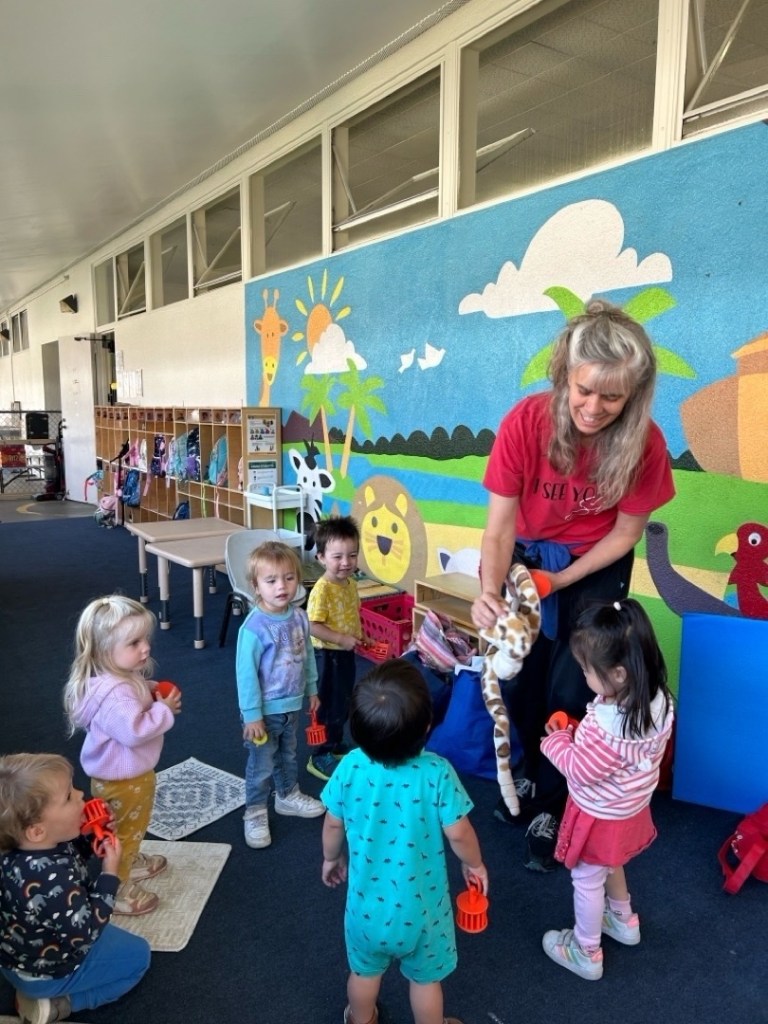
He still cries a bit when I drop him off, but as soon as I’m gone, he’s too busy having fun with his teachers and Big Buddies. He wakes up every morning eager to go to school.
Yesterday I went to pick him up and he was grinning and having a jolly time. He no longer cries when he sees me at pickup time, but— thank God for these sweet moments— he still runs into my arms when I arrive, delighted to see me, knowing home has come.
-
How nursing with Woori is going (It’s not)
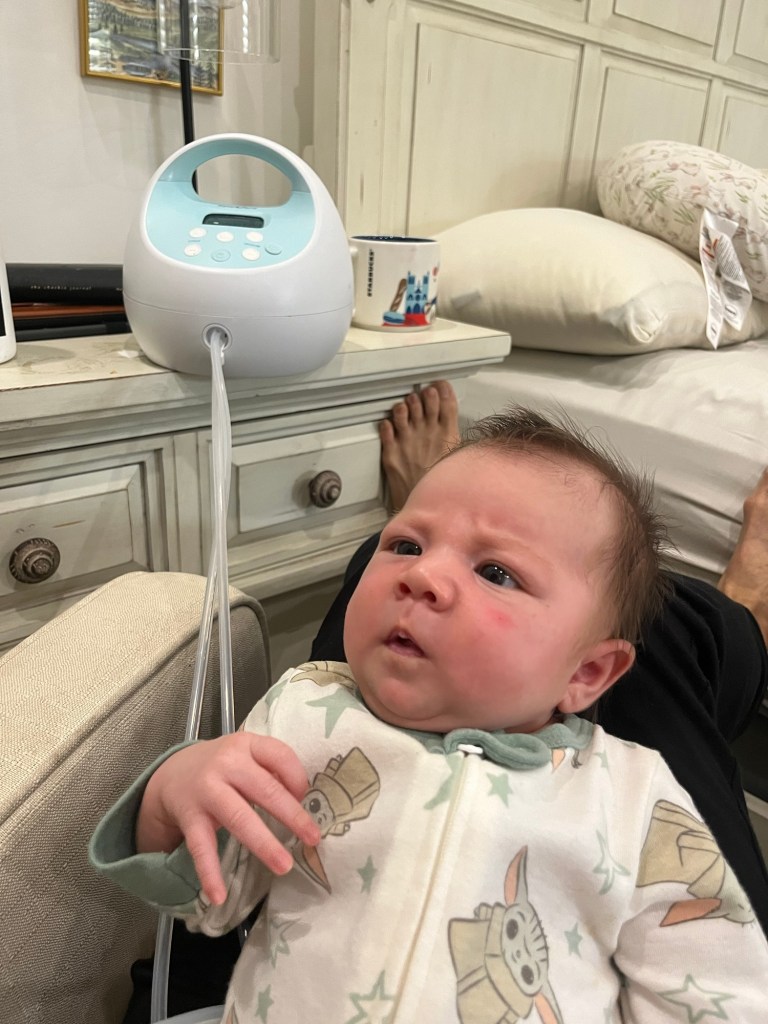
I would love to follow up my last post with a post about how I’ve become calm and collected, gentle and lowly like Jesus, but no. I have been experiencing major mom rage, and a lot of that has to do with how nursing is going with Woori.
Probably because at this stage of infancy, all I ever do is feed this baby. All day long. No sooner have I finished nursing, bottle-feeding, then pumping, do I have to start the process all over again.
Woori is 5 weeks today. Which means we’ve been stuck in this hell cycle of triple feeding for five weeks. I would go five more weeks if there were signs that she’s improving, that one day I can exclusively breastfeed her without worrying if she got enough, worrying about pumping, worrying about my milk supply.
But then I go to a lactation support group, weigh her after a 45-minute nursing session, and find out she had sucked only 1 ounce.
Forty-five minutes, and we get 1 measly freaking ounce. I guess that’s better than 8 ml (0.27 ounce), which was what she ingested the first time I joined the lactation support group. But still. I want my 45 minutes back!!!
“She’s…at least getting better,” the lactation consultant Mary said pityingly. She asked me how much I’m pumping.
Two to 5 ounces, I said, depending on time of day.
“So it’s not your milk supply,” she said. “How many times do you pump a day?”
Eight, I told her. Almost every feeding session.
“Well, I’m worried about you. That’s not sustainable,” Mary said.
Nope, it is not.
Mary suggested going to an occupational therapist. But for some reason, the thought of going to another appointment with a specialist that might not work, that might be another waste of time, money, and hope, felt overwhelming to me.
“I just worry about you,” Mary repeated. “What you’re doing is not sustainable.”
I fought to blink away tears. Up till then, I’d been pretty stoic about this triple feeding process. I complained some, but it was a routine I did, day by day, without thinking too much about it. But it was wearing me down. And when I came to this lactation support group, I had had hope that Woori was finally nursing much better. So to see that number— 1 ounce— felt crushing. I wanted to throw myself on the floor and weep.
“Let’s try again,” Mary suggested.
So I went back to the nursing pillow, and tried to rub Woori awake, but she was drowsy from all the calories she spent nursing without getting much calories in return. We stripped her down. We turned a fan on her to keep her awake. She squirmed and pushed but I kept her plastered on me.
Thirty-five minutes later, we weighed her again. She had just under another ounce of milk.
Two hours, 2 ounces. A baby at her age needs about 20-24 ounces a day. That’s 20 to 24 hours of nursing I have to do to get her what she needs, if I were to exclusively breastfeed.
Unsustainable, indeed.
Two evenings ago, I lost it.
We had just finished eating dinner, and as always, David wanted to go for a walk. That’s been our daily routine since we met, but since we’ve had Woori, more often than not, David has been going out for a walk with Tov while I stay home with Woori, nursing and pumping.
This evening, I really wanted to go for a walk too. I had been cooped up at home all day. I had not been able to get my regular workouts in that week because Woori’s naps have shortened to barely half an hour, and when she’s up, she wants to be held. And then of course there’s her feeding schedule.
But come 6:30 pm, I was still stuck in the chair nursing Woori. I had passed out, so I couldn’t tell if Woori had even been sucking or simply suckling.
David stuck his head into the room. “Are we going?”
I opened my bleary eyes. “I don’t think I can go,” I said. I still needed to pump, and it was getting late, and our walks are usually almost an hour long.
So David got ready to go for a walk with Tov without us.
We were alone at home. Again. Man, I really wanted to go out for a walk.
By then I had maybe been nursing for a good 45 minutes. Surely she’s gotten something out of this, I thought.
But no. As I lifted Woori up and walked around the house, she began sucking on her fingers— cues that she’s hungry.
I groaned— a deep, guttural burst of livid frustration. How. HOW! How is she STILL freaking hungry?! Did my milk ducts dry up? What the heck have we been doing for the past 45 minutes?!
In a whoosh, I felt rage boiling out of me like fresh hot lava. I felt resentment that David got to keep all his routine— a 90-minute workout every morning, walks every afternoons and evenings, hot coffees, work and conversations with adults— while I was chained to this never -ending cycle of feeding a baby who had a piss-poor suction. I could feel the hours we spent trying to nurse flattening my butt into a Swedish pancake, all my hard-earned muscles softening like butter. I felt fat. I felt unproductive. I felt utterly demoralized and discouraged and deflated.
I burst into angry tears. And then, because tears were not enough, I picked up the first thing I saw— a big-ass plastic dump truck filled with blocks that a very kind friend had gifted Tov that day— and hurled it across the room. Red and yellow blocks scattered across the floor. That was still not enough, so I kicked his plastic fire truck across the room, too, and it somersaulted in the air and skidded next to the other giant truck.
I calmed down a little then. Or rather, guilt and shame tampered my rage. I felt bad that Tov’s toys had to bear the brunt of my lack of self-control. I checked on them and was relieved they weren’t broken.
Then I warmed up 4 ounces of pumped breastmilk and bottle-fed Woori. Sure enough, she gulped that thing down as though I haven’t just spent the last three-quarters of an hour trying to feed her. I could have cried again.
At that moment, I remembered what a woman had told me after helping watch Woori for an hour: “She’s so easy! All she does is sleep and eat and poop!”
I knew she meant it as a compliment or something. But when I heard it, I felt triggered and irritated. I thought, Of course she’s easy, after you’ve golfed all day and shopped at a farmer’s market and all you do is hold her for an hour in the evening. Of course she’s easy, when that bottle you’ve fed her was squeezed from someone else’s dairy farm. Of course she’s easy, when you get to hand her off so you can go home and sleep when you like, for however long you’d like.
I knew I wasn’t being fair. But I wasn’t in a mood to feel gracious and rational. I felt like my struggles were belittled. And then, on the flip side, I belittled myself: What are you whining about? Why is this so hard? It’s so easy. Just suck it up.
I dried my tears and gulped down my frustrations and picked up Woori and spoke to her gently. Something will have to change, and we’ll figure it out together.
Later, while I was bathing Woori, I heard David and Tov return from their walk. Tov stomped up the stairs to greet his new truck. “Argh! Oh nooo!” I heard him exclaim to see his dump truck turned upside down and all the blocks skittered across the room. I felt guilty, but also tickled at his dramatic reaction. I heard him gather all his blocks again and put them where they belong into the dump truck.
He pushed that truck into the bathroom where I was bathing Woori, and he greeted cheerfully, “Hi!” He had no idea the tantrum I had thrown just 20 minutes before. I pulled him close and kissed his cheeks, penance for throwing his toys, though he had no idea what I had done. If only all the moments of my mom rage could be as easily remedied as picking up plastic blocks.
An hour later, I was back in my nursing chair with Woori, restarting the process again.
Of course, all this could end if I stopped being stubborn and just gave up on breastfeeding. I’m keeping this cycle going because at the end of the day, I still have the privilege of choice. I told myself I’ll keep on going for as long as I can, and maybe that breaking point is coming.
I hired a personal lactation consultant who lives nearby to come visit me. It’ll be the fourth lactation consultant I’ve seen. She’ll visit me next week, and maybe it’ll help, maybe it won’t.
But I need a new plan. Tov’s toys don’t deserve my mom rage.
-
Gentle & Lowly as a Viper

I have a necklace that I’ve not taken off since I got it two Christmases ago. It’s a thin gold chain with a circle pendant that says “Gentle & Lowly” and has two heart-shaped tags with David and Tov’s initials on it.
I chose to engrave “Gentle & Lowly” on my pendant in reference to Dane Ortlund’s book Gentle and Lowly: The Heart of Christ for Sinners and Sufferers, which draws from Jesus’s own description of himself as “gentle and lowly in heart” in Matthew 11 to point out the essence of God’s heart for His people. It was written for, in Ortlund’s own words, “the discouraged, the frustrated, the weary, the disenchanted, the cynical, the empty. Those running on fumes. Those whose Christian lives feel like constantly running up a descending escalator. Those of us who find ourselves thinking: ‘How could I mess up that bad– again?’”
Reading Ortlund’s book made me look at Matthew 11:29, a familiar verse– “take my yoke upon you and learn from me, for I am gentle and lowly in heart, and you will find rest for your souls”— in fresh eyes. Ortlund points out that of the four gospels, this is the only instance in which Jesus describes his own heart— and if that’s the case, we ought to pay attention: Jesus, the Son of God, King of Kings, describes himself as gentle and lowly in heart. His orientation towards us is that of mercy, love, compassion, self-sacrifice. He hates sin, to the point of dying on the cross because of it, but his heart towards the penitent is open, wide, and forgiving. That has profound implications on our relationship with God, and our relationship with others.
I was moved by the heart of Jesus. His gentleness and lowliness taught me what it means to be “Christlike,” to be “the aroma of Christ to God among those who are being saved and among those who are perishing, to one a fragrance from death to death, to the other a fragrance from life to life.” (2 Corinthians 2:15-17)
If the Jesus who lives inside me through his spirit is gentle and lowly, then I too want to be gentle and lowly. I too want that to be the key descriptor of my heart and posture.
There’s just one problem. I’m about as gentle and lowly as a viper. Anyone who knows me would never think to use “gentle” or “lowly” to describe me. In fact, it’s the people who are closest to me who have been bitten most by my viper moments.
Just a week ago, while my parents were visiting us to meet Woori, I had another viper moment. It was the hottest week of the year, but that’s not what turned me into a viper. I actually cannot always explain why I get so snappish and irritable sometimes. I’d like to blame the sleep deprivation, or postpartum hormones. I’d like to blame my frustration with the lack of improvement in nursing Woori. I’d like to blame the increasing meltdowns from Tov, who have been crying and screaming so often his voice is now as hoarse as a chronic smoker’s. But I cannot. Sometimes, I’m just a bitch for no reason.
David had just clambered up mid-afternoon to get a snack, and he asked me what was in the mixing bowl sitting on the kitchen counter.
“Bread,” I said.
He made a face. “Can we not use the oven today? It’s too hot. I don’t want the AC running all day.”
I ignored him.
“Sophia? Sophia?”
I felt a hot flash of irritation. The dough was already rising, and I was so sick of hearing David complaining about the weather. “Whatever,” I snapped. “Just shut up.” Then I walked away.
My mother, who was present at the time, observed the whole interaction. She went up to David later and told him, “Sometimes, she can really stab a dagger into your heart. She does that to me too.”
I only know because David told me later, while I was nursing Woori. “You really need to watch the way you talk,” he said. It’s like a whiplash, he told me. One moment I’m fine and happy, and the next moment— whoosh! The viper strikes.
I felt like such a fraud. I call myself a Christian, yet there’s very little Christlikeness in me. I am a mother who’s thinking and talking about raising my children in the faith, yet my faith does not primarily shape the way I think, speak, and act.
Gentle and lowly I am not. I am not gentle and lowly with my husband when he annoys me or does things that make me feel misunderstood or unappreciated. I am not gentle and lowly with Tov when he is being particularly whiny and screamy, and my nerves are all frayed from over-stimulation.
All the more ironic that I wear that engraved in my necklace 24/7, and also all the more reason why I should wear it constantly as a reminder. During these moments though, long after I had already struck my head out and sunk my fangs into my prey’s heart, I wear that pendant like a scarlet letter, an ugly red brand of shame and regret.
I feel stuck in this cycle of striking and remorsing. I of all people know best that I need to watch the way I talk, to be slow to speak and slow to anger. The consequences of my speech and action get more and more serious as I age. With my parents, I know they’ll always love and accept me, no matter how poisonous my fangs are. With David, I know there’s a limit before the toxins reach the bloodstreams of our marriage. And as for my children, I am terrified of scarring them for life.
And yet. There are those viper moments, when my fangs rear up before my brain even recognizes what I’m doing. If Jesus’s essence is gentleness and lowliness, my essence seems to be sharpness and haughtiness. It is what spills out of me the instant I’m poked and punctured. It’s hard for me to even ask David for forgiveness then, or pray, when I’d rather tuck my head into a hole and hide, or worse, root around the dirt looking for justifications for my behavior.
There was a time when I wanted to go to seminary to study theology. I read Wayne Grudem’s Systemic Theology for fun. I loved gathering knowledge and understanding, like picking fruits into a basket, and debating things like predestination and complementarianism. I am by nature a nerd and love learning new things, but all that knowledge also puffed me up, deceiving me into mistaking education for sanctification. The fruits of knowledge I gathered in my basket, hoarded but unused, rotted into brown, putrid mush. What’s the use of learning about the fruits of the Spirit— gentleness and self-control in particular— when I don’t manifest them in my own life? So much of my theology has become like my necklace— it’s there, and I’ve gotten so used to it being there, that I no longer put any consciousness into why it’s there, what it’s for. It’s become little more than a pretty decoration, like the wedding ring of an adulterer.
These days, Woori likes to grab at my necklace. She’s still too young to intentionally grasp at objects, but she can wrap her tiny fingers around the chain and tug at it with a firm grip. I’ll have to untangle her fingers, gently removing each finger, careful not to hurt her delicate pink skin. And that’s how I remembered: Oh yeah. The necklace. Gentle & Lowly. With the initials of the two people with whom I’m the least gentle and lowly.
It’s not so much that I’ve forgotten to be gentle and lowly. It’s that I’ve forgotten Jesus, forgotten his heart for me, forgotten to fall in love with his heart over and over again.
Last Sunday, I sat in the church’s nursing room with Woori and listened to a sermon about the historical reliability of the gospels. It was more a lecture than a sermon, the nerdy kind I love, with lots of historical facts and intellectual stimulation. It was an engaging sermon, but I was half-distracted. I listened while struggling to nurse Woori, getting frustrated and discouraged by her lack of improvement, and then fumbling hot and bothered underneath a nursing cover trying to pump as discreetly as I could, silently cursing the men present in the nursing room.
The sermon ended, and worship started. The worship band sang “King of Kings” by Hillsong, a 5-year-old song I’ve heard and sang many times. In fact, I remember grousing internally, Ugh, another Hillsong song. I want old hymns! They’re so much richer and deeper than these contemporary Christian music.
They started singing:
In the darkness we were waiting
Without hope, without light
‘Til from Heaven You came running
There was mercy in Your eyes…And then the chorus:
Praise the Father, praise the Son
Praise the Spirit, three in one
God of glory, Majesty
Praise forever to the King of KingsI don’t know why. But I started weeping.
It wasn’t the beautiful melody. It wasn’t just the lyrics. It was just, at that moment, so spiritually parched, I felt the first drop of a light rain, and man, it felt so sweet. So sweet it broke me.
It was the power of worship. Praise the Father. Praise the Son. Praise the Spirit, three in one. Praise forever the King of Kings. A simple praise. A simple reminder of the majesty and glory of God. And I remembered, then, how awesome, how incredibly freeing it is, to simply lift my head up and worship Him, not just for what He’s done, but who He is.
Even when I chose the engraving for the necklace, I was more fixated with what I must become. When I failed, I berated myself, excused myself, hid myself. If I counted all the ways I failed as a wife and a mother and a daughter and a human being, I would get too overwhelmed to do anything about it. I can’t will my heart to change. I need a whole new heart. I need the heart of Jesus.
There is a time to study the Bible like a theologian, to analyze verse by verse with commentaries and highlighters. I don’t have that time right now. Much of my day is spent nursing Woori round the clock, pumping while trying to keep her from fussing and crying, dealing with Tov’s tantrums and antics, cooking and cleaning and oh God, endless loads of laundry stained with pee and poop and breastmilk, a domestic potpourri of sourness, pungency, and sticky sweetness.
But then in the midst of my hurry Woori grabs my necklace, and I think not of what I’m not, but who Jesus is.
This is a time to just think about Jesus, and fall in love with his heart, and worship him, because we become what we worship, and the one I worship is gentle and lowly.
-
Our Woori, My Woori
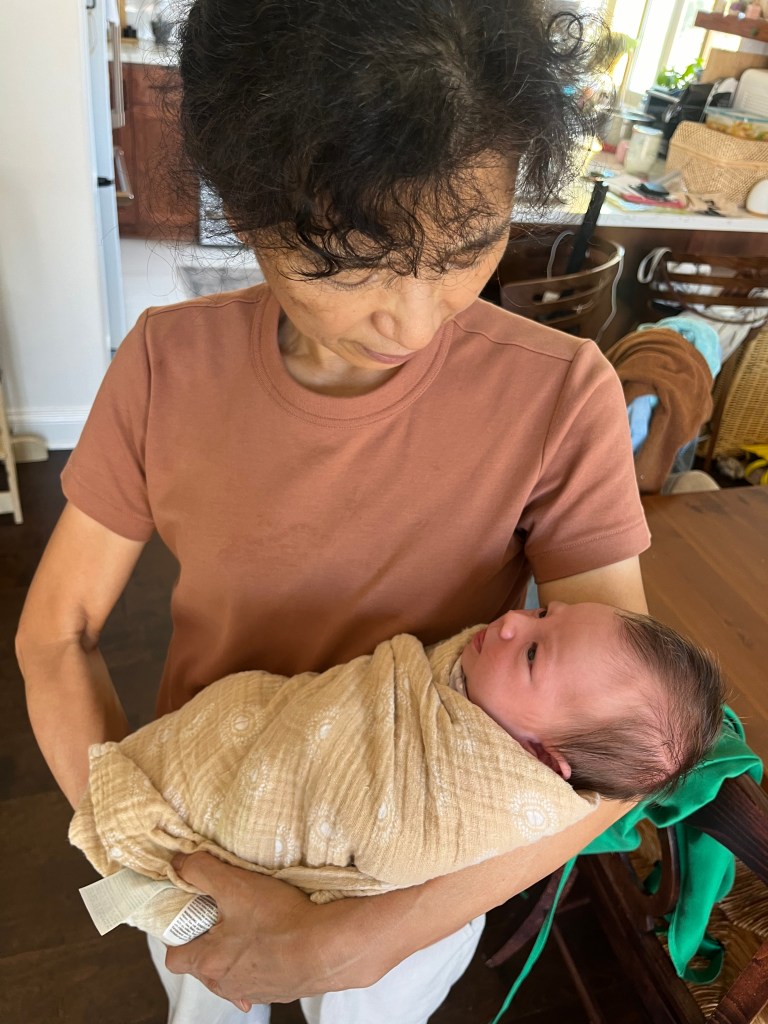
Before we had Tov, before I even realized I wanted a child, I had a name for my firstborn.
I got the idea for Tov’s name while reading A Church Called Tov by Laura Barringer and Scot McKnight. I learned what the Hebrew word “Tov” meant then, and I fell in love with it, thinking, “If I had a child, I’d name him or her Tov.” And then I rolled my eyes– yeah, right, like I’d ever become a mother.
Just like Tov, I had a name for my secondborn before she was conceived.
At the time, I was working on a reported piece for Christianity Today about the modern-day challenges of finding community, and it quickly became more a personal essay because the piece was born out of my own frustrations and desire for community. In that essay, I was frank about my shortcomings and the mistakes I made that made community more challenging, and one thing became clear to me: I’m incredibly individualistic.
I’ve always been a very independent person; even as a kid I couldn’t wait to grow up, leave my parents’ house, and forge my own path. Since young, I’ve always been drawn to the western culture and celebration of individualism. It just felt right and natural to me, to emphasize self-autonomy, self-reliance, self-identity. I looked down on the Asian concept of collectivism, dismissing it as unenlightened, suffocating, and oppressive.
Over the last few years, as I study the Bible more and understand more about the nature of God, I’ve come to realize how some characteristics and consequences of individualism are actually unbiblical and toxic. God Himself is Three in One, and through perfect unity and community He created humankind, saying, “Let us make man in our image, after our likeness.” God didn’t call us into an individual relationship with Him; we are called into the Body of Christ to worship and fellowship together in community.
When Jesus Christ came to earth in flesh, he dwelt in a collectivist society, and one of the first things he did when his ministry started was to build a community. He then called us to build the Church– again, community. When he taught us to pray, he didn’t teach us to call out “My Father,” but “Our Father.”
The early churches met and broke bread together every day, sharing their possessions and wealth. The immediate work of the Pentecost was to break down the barriers between languages and cultures, and later creating unity between Gentiles and Jews under one Body and one Spirit. So much of the Spirit’s work is about reaching out to others, reconciling people, and loving people well. The fruits of the Spirit all have to do with our relationship with others.
If God Himself is communal, existing in community and encouraging community, then I need to change the way I think about myself in relation to others, and the change the way I view and participate in community.
That’s how I came to really appreciate the Korean word “woori” (우리), and how unique and pervasive it is in the Korean culture. In direct translation, woori means “we” or “our” or “us,” but the word contains a much deeper Korean concept of self and others. It evokes a sense of community, unity, oneness. Korean culture values community over the individual, expressed through the way Koreans frequently use “our” rather than “my.” That’s “our house,” for instance, or “our husband,” or “our school.”
I really took notice of the Korean concept of “woori” after Tov was born, when my parents would ask, “How’s woori Tov?” “Let us see woori Tov!” “Aigo, why is woori Tov so handsome? Must have grandpa’s eyes!”
Despite becoming so westernized in my thinking, I also realized how Korean I still am, when I felt a twinge after I heard my husband refer to Tov as “my son” rather than “our son.” I felt like I got cut off from the picture. On the other hand, even when David wasn’t around, I referred to Tov as “our son.” That just felt innately right to me.
That Korean use of “woori” might feel jarring for people from a more individualistic mindset. My friend, who just gave birth to a beautiful daughter, recently told me that she had to correct her mother when she cooed at her granddaughter, “There’s my J!” “No,” my friend told her mother firmly. “She’s not your J. She’s not your daughter. She’s my daughter. Mine.” I understood where my friend is coming from. She has a history with her mother, and she’s setting boundaries early. It’s what modern-day therapists and psychologists advise, too: Set boundaries with people for self-care and happy relationships. Only you get to decide what is acceptable and not, what’s your limit. Communicate that clearly to others, especially family, the source of your deepest triggers.
Meanwhile, the word “boundary” as used in this context doesn’t even exist in the Korean language. They literally have to use the English word “boundary.” Koreans might say “don’t cross the line,” but I believe that statement is a modern saying that didn’t become mainstream in Korean society until recently.
I actually think there’s something beautiful and right about my parents calling my children “woori.” It reminds me my children are not my own, that they’re part of a rich and long heritage, that they belong to not just a biological nuclear family but a more timeless, expansive family. I love my children dearly, but my and my husband’s love for them is not the only love that will shape, edify, and enrich them.
And that’s why, about a year ago, as I revised my thoughts on individualism, as I prayed for community, as I took notice of the obstacles I put up between me and a vibrant community, I thought, “If I have a second child, I think I’ll name him or her Woori.”
Several months later, I found out I was pregnant. And on August 19, 2024, I held our daughter in my arms and wrote on her birth certificate, “Woori Grace Lee-Herrmann.”
For all my philosophizing of Woori’s name, the practice of living it out is much harder and messier. I may recognize the good in my Korean heritage’s communal culture to the point of naming my daughter Woori, but there are still aspects of it that make me instinctively recoil and hesitate. Just like there are aspects of the individualistic society that are unbiblical and unhealthy, there are parts about the collectivist society that’s also unhealthy and twisted, and I still struggle to judge what is right and biblical, and what is not.
I am, by nature, still a very individualistic person. I live in an individualistic society steeped in individualistic culture. My Instagram feed is full of expert parenting advice on setting boundaries with your parents and in-laws, on how to raise kids with good self-esteem, a strong sense of self-identity, and a bold voice to express one’s rights and needs– all good things, great things. But some of those things are foreign to my very Korean parents, and we butt heads over our two very different cultural contexts.
If you have an Asian parent, you’ve probably gotten your fair load of unsolicited advice. My parents frequently tell me how to parent our children, which I oftentimes receive as passive-aggressive criticism.
“You have to make sure you wash his hands properly,” my mother would say after Tov developed strep throat, as though we let Tov roll around and sleep in dirt. When we FaceTimed during dinner, she would let out little shrieks as Tov dug into his pasta with his hands, sauce dribbling down his forearms. “Wipe his arms! Wash his hands!”
When she saw a photo of our nanny showing Tov a picture on her iPhone, she immediately texted to remind us not to give any screen time to our child.
When she saw how easily distracted Tov is, she hinted at the possibility of ADHD and exhorted me to train him to focus on one task at a time, even though he was still barely a toddler.
She compared Tov’s speech development with my niece’s, sent videos instructing me how to teach a delayed child to speak, and suggested I send him to a speech therapist.
She reminded me over and over again that a baby needs to sleep in complete silence and darkness. She complained about the loud washing machine downstairs, the loud noises outside, the loud work meetings in David’s office, and other auditory disruptions that will certainly stunt my children’s brain development, disregulate their emotional stability and perhaps that’s why Tov’s so delayed in speech and so unfocused?
Each time this happened, grenades popped off inside me. “Aish, Omma, just stop nagging!” I would snap at her, and my father would jump to her defense. “No parent nags less than we do!” he snapped back. “You don’t know how good you have it.” And then he preached about the Bible commanding us to honor our parents. “Let us live according to the Bible,” he said. “Blessed are those who let their parents nag.”
“Pretty sure that’s not in the Bible.”
“Oh, woe is our generation,” my father lamented. “We are the most pitiful generation ever. When we were young, we could not say a word back to our elders. We had to respect and tiptoe around them. Then we have children, and times have changed. Our children now disrespect us, and we have to tiptoe around our children. We served those above us and now we serve those below us, and nobody serves us!”
“So you want me to tiptoe around you, kowtowing and saying ‘yes, yes’ to everything you say?” I retorted back.
My father shook his head, as though shaking his head at the entire spoiled, entitled, and disrespectful generation to which I belong. “Truly, the end times are coming. Culture is changing too fast. So let’s just do as the Bible says. Honor your parents.”
“Honoring your parents doesn’t mean we just have to keep quiet when you’re vexing us,” I said, getting more and more heated. “The Bible also says, do not vex your children.”
Here’s the thing: I really, really like the concept behind “woori.” I really appreciate the values of community, unity, and sacrificing self for the common good. It’s so ideologically charming and pleasing, like the idea of sipping tea in an old English cottage with a thatched roof– until you realize those quaint, pretty roofs can be annoying to maintain, vulnerable to fungal attacks, fire, and bug infestation.
I like my parents calling my children “woori” until the actual practices of it grate against all my individualistic impulses and preferences. I don’t like people telling me what to do, even if it comes in the form of harmless advice and suggestions that I can always choose not to follow. I love it community when my parents help watch Tov so David and I can go on a date, or when they say nice things about them, but I get triggered when my mother worries over Tov or Woori, or mutters the mildest hint of criticism, and I get even more triggered when my father starts preaching at me with Bible verses. I like the “woori” concept only when it benefits me and requires little effort or sacrifice from me: You can love my kids, but from a distance, saying only positive things, and God forbid you care enough to suggest what you think might be best for them. That’s the opposite of what “woori” is.
I don’t intend to obey everything my parents say. I’m an adult, and they raised me to be independent and mature, capable of making my own decisions. But at the very least, I can listen to their unsolicited advice and their preaching without getting snappish, even if they annoy me, and be genuinely thankful that someone else cares so much about my children to worry and nag about the details of their upbringing, things that most people don’t even bother thinking about because our children are not “woori” children.
Woori’s name was a gift from me to her– a prayer, a blessing, and a benediction that she would never lack community, that she will seek and find and form a community wherever she goes, breaking and sharing bread with all kinds of family.

But Woori’s name is also a prayer and a blessing for me, too, as Tov’s name has been for me. Both our children’s names embody an important, essential characteristic of God. In my pursuit to know God more, to meet him the way Moses did– speaking to him face to face, “as a man speaks to his friend” (Exodus 33:11)– I see the image of God in my own children, even as they reflect my image: Woori Tov, and woori Woori.
-
Tov meets Woori

I remember the day of my first date with David.
It was my first official date ever, really, the first time a man had formally asked me if he could take me out for a date, instead of that annoyingly ambiguous “Want to grab a bite to eat?” that could mean so many things.
We were to meet at 6 pm, but I started getting ready at 5 pm. There really was no need– it took 10 minutes to do my very minimal makeup and another 3 to change from sweats to jeans– but it was the anticipation of getting ready for something exciting and slightly nerve-wrecking. I felt like a high school girl getting ready for the dance.
I felt similarly the morning after I gave birth to Woori. She was dozing deeply next to me in her hospital bassinet, and the morning sun was starting to pour golden pools through the window blinds. It had been less than 12 hours since she was born, and I hadn’t had more than 20 minutes of uninterrupted sleep. My head was light, and my heart was fluttering.
David called to tell me he’d be visiting with Tov at 9 am. By then, I hadn’t even yet announced to any of my friends that I had given birth. Only our family knew (and unfortunately, all of David’s business clients), but Tov did not know.
We had been prepping him months before Woori’s birth, of course. I told Tov repeatedly that there’s a baby in my belly. “Where’s the baby?” I’d prompt him, and he’d smile and point at his own belly. He did not get it.
A friend bought Tov a book called “You’re a Big Brother.” I pointed at the pictures in the book. “Look, there’s omma. There’s abba. There’s Tov. And there’s…baby!” He loved that book. We read it over and over again, and I kept pointing to the characters in the book: “Omma…abba…Tov…baby!” And then later I’d ask him, “Where’s Tov?” hoping he’d point at the boy, but he’d always point at the baby in the crib. He thinks he’s still the baby in the family.
As the due date approached, people asked me how Tov feels about becoming a big brother, and I told them he has no idea. “He’s in for the shock of his life,” I joked, but I guess it’s not a joke. He is in for the shock of his young life. Never ever has he not been the center of attention since he was born. He was the baby of the home, the emperor and prince. Guests came and cooed at him, not anyone else. And now, someone was about to take his place.
I wondered how Tov will react to meeting his little sister. I was nervous, but more curious and excited, just like how I felt that evening waiting for David to show up at my apartment gate. Will he show interest in her? Will he completely ignore her? Will he break down into jealousy? Will he be thoroughly confused by the appearance of a stranger who never left?
The minutes ticked down. I ate the hospital’s very bland breakfast and saved the blueberry muffin bottom for Tov (the hospital menu claimed it was homemade blueberry muffin, but it was a package from Otis Spunkmeyer). I watched Woori sleep. I tried not to get annoyed as nurses barged in every 5 minutes.
And then around 9 am, I heard him. He’s a very loud boy. I heard his running footsteps from down the hall. Several minutes later, the door opened, and Tov stomped in with David behind him.
Oh, I missed this boy. It’s only been 17 hours since I last saw him, but a whole world had changed since then. My balloon stomach had deflated. I don’t have to drink decaf coffee anymore. Another Lee-Herrmann was in the birth records. And our family dynamics will never be the same.
“Hi, Tov!” I greeted, and he bounded over to me like a kangaroo with a huge grin. I gave him a big hug and kissed him. I purposely delayed introducing him to the baby; I wanted time for him to adjust to seeing me in a strange new room, to greet him properly and make him feel like he’s the star attention.
“Look what we have for you!” I said, and whipped out a wrapped gift that the women in my discipleship group had bought for Tov. They had thoughtfully written “Especially for Tov” on the wrapper.
“Woooow!” Tov exclaimed, and immediately demanded, “Open, open!”
We opened the gift. It was a digital book about animals. While we tinkered with it, David went over to Woori and bent down to look at her, and that’s when Tov noticed the baby.
“Tov! You want to come meet her? Yeah, that’s your little sister!”
I took off his shoes and lifted him up onto the bed. He crawled towards the bassinet and peered over to gaze at the tiny pink face, whose eyes were closed in peaceful slumber, her head covered in that classic newborn pink-and-blue striped hat.
“See Tov, that’s your little sister. Her name is Woori.”
“Bebe!” Tov cried, pointing. Then he got distracted and pointed at the clock on the wall: “Cuckoo!” And then his interest got drawn to the baby again. “Bebe!”
That first moment was about as anticlimax as expected. He was constantly distracted, either by the clock or the packaged blueberry muffin or the new toy, and most especially, the bassinet, which he insisted on climbing into and lying spread-eagle as though he himself is the baby.
And it was also as sweet and precious as I had hoped for. When he did remember the baby, he was enthralled. He pointed at her eyes. He pointed at her nose. He patted her on the head. He pressed his forehead onto hers. He kissed her forehead, her nose, her cheeks, over and over again, delighting in the act. It was sweeter than my first kiss, more precious than my engagement ring, more satisfying than my first byline.
I wanted to hold this moment with both palms and cradle them into the deepest groove of my heart. I wanted time to pause, and replay slowly, over and over, that moment when my firstborn met my secondborn, and my whole family bunched together in that morning glow like a fresh-picked bouquet, pure and crisp and new.
Even as I was pregnant with Woori, feeling her kicks and seeing her little figure on the ultrasound, I couldn’t imagine loving her as much I as love Tov. People with multiple kids told me your heart grows. Bitterness and anger corrode the heart, but there’s always space in the human heart for more love; in fact, the more love it fills, the bigger and stronger and healthier it gets.
My heart is the biggest and strongest and healthiest it’s ever been.
Lord, you are so good.
 Writing for Sophia
hello, my name is Nayara. I’m Brazilian mother of two. I live in Maryland. My daughter’s name is Sophia. I am reading your texts one after other because for the first time I found someone describing what’s in my mind and my soul. Your blog came to me in a Google search response for my question: is my desire for more kids legit?
yeah, it’s weird to ask this to Google.
but wanted to let you know I enjoy reading your blog and we share many thoughts, fears and questions.
ill continue reading now , bye.
nayara
LikeLike
Thank you so much for reading, Nayara! I’m glad you can relate. 🙂
LikeLike